Ensuring your binoculars are perfectly aligned can make all the difference in your stargazing experience. With the right collimation checker, you can quickly and easily achieve peak performance. From user-friendly designs to adjustable brightness levels, there are plenty of options out there. Curious about which tools stand out in the market and how they can enhance your viewing? Let’s explore the top contenders that might just elevate your nighttime adventures.
SVBONY Red Laser Collimator for Newtonian Telescopes
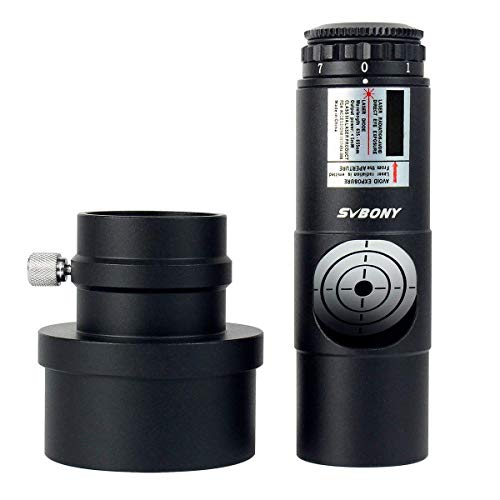
If you own a Newtonian telescope and want a hassle-free way to confirm your equipment is perfectly aligned, the SVBONY Red Laser Collimator is an excellent choice. This tool’s designed specifically for calibrating reflecting telescopes, fitting both 1.25 and 2-inch models. You’ll appreciate its quick collimation process, which takes just minutes and eliminates frustrating adjustments. With a solid metal body and a triple cemented lens, it offers durability and stability. Plus, seven adjustable brightness levels confirm you can align in any lighting condition. It’s not just practical—it’s a fantastic gift for any stargazer on special occasions!
Best For: Stargazers and telescope enthusiasts looking for an efficient and easy-to-use collimation tool for their Newtonian telescopes.
Pros:
- Quick and easy collimation process takes just minutes, saving time and effort.
- Durable construction with a solid metal body and triple cemented lens for enhanced stability.
- Seven adjustable brightness levels for optimal visibility in various lighting conditions.
Cons:
- May not be suitable for non-reflector telescopes.
- Requires a compatible telescope size (1.25 and 2-inch) for proper use.
- Some users may prefer manual collimation techniques for more precise adjustments.
Astromania Laser Collimator for Newtonian Dobsonian Telescopes

For amateur astronomers using Newtonian Dobsonian telescopes, the Astromania Laser Collimator stands out as an essential tool for achieving precise collimation. Designed to fit standard 1.25-inch diameter focusers, this multi-function device features a red laser beam with seven brightness levels, ensuring visibility in various lighting conditions. With its durable anodized aluminum construction, it’s built for long-term use. You’ll appreciate its ease of use, as it comes fully adjusted and allows for further fine-tuning. Accurate collimation means improved image clarity, helping you get the most out of your telescope with every stargazing session.
Best For: Amateur astronomers using Newtonian Dobsonian telescopes who seek precise collimation for improved stargazing experiences.
Pros:
- Easy to use and fully adjusted upon purchase, with options for further fine-tuning.
- Durable construction with anodized aluminum ensures long-term reliability.
- Multi-function tool with seven brightness levels for visibility in different lighting conditions.
Cons:
- Limited to standard 1.25-inch diameter focusers, which may not fit all telescopes.
- Requires batteries (one CR2032 included), which may need replacement over time.
- May be less effective in bright daylight compared to nighttime use.
GSO 0.5X Focal Reducer 1.25″ (31.7mm)

The GSO 0.5X Focal Reducer is an exceptional choice for astronomers looking to enhance their viewing experience through a 1.25″ (31.7mm) eyepiece. With a magnification of 0.5x, it effectively doubles your field of view, letting you capture more of the night sky. This compact reducer, made from CNC machined aluminum, weighs only 0.6 oz and features fully multi-coated, high-quality Hooley lenses. Its sturdy design guarantees durability while maintaining excellent optical performance. As a product of Taiwan GSO, you can trust its quality in helping you achieve perfect collimation and alignment during your stargazing adventures.
Best For: Amateur astronomers and stargazing enthusiasts seeking to widen their field of view while using a 1.25″ eyepiece.
Pros:
- Fully multi-coated lenses enhance light transmission and image clarity.
- Lightweight and compact design makes it easy to transport and use.
- CNC machined aluminum construction ensures durability and long-lasting performance.
Cons:
- May not be suitable for high-magnification observations.
- Limited to use with 1.25″ eyepieces, restricting compatibility with larger equipment.
- Some users may require additional adapters for specific telescope models.
Carson CloseUp 6x18mm Close-Focus Monocular (CF-618)

Carson’s CloseUp 6x18mm Close-Focus Monocular (CF-618) is an excellent choice for anyone who values portability and versatility in a compact optical device. Weighing just 2.8 ounces and measuring only 3 x 1.1 x 1.3 inches, it’s perfect for travel and outdoor adventures. With a 6x magnification and a field of view of 427 feet at 1,000 yards, you’ll enjoy clear images whether you’re bird watching or attending a concert. Its impressive close focus feature allows you to view subjects just 10 inches away. Plus, with a solid customer rating, you can trust its quality and performance.
Best For: The Carson CloseUp 6x18mm Close-Focus Monocular is best for outdoor enthusiasts and hobbyists seeking a lightweight and versatile optical device for close and distant viewing.
Pros:
- Extremely compact and lightweight design, making it easy to carry on travels and outdoor activities.
- Impressive close focus feature allows clear viewing of subjects as close as 10 inches away.
- High customer rating reflects reliability and satisfaction among users.
Cons:
- Limited magnification power may not satisfy users looking for more detailed long-distance viewing.
- Objective lens diameter of 18mm may result in lower light gathering ability in dim conditions.
- Some users may prefer a wider field of view for specific applications like bird watching.
Astromania Stereo Binocular Viewer for Telescopes

Transform your stargazing experience with the Astromania Stereo Binocular Viewer, especially if you’re looking to enjoy a more natural, immersive observation. This viewer features a 1.25″ barrel and comes with two 32mm Plossl eyepieces, providing almost 3D viewing. You’ll notice how it reduces eye strain, letting you observe comfortably without squinting. Compatible with various telescopes, including Newtonian and Schmidt-Cassegrain, it includes glass path correctors that multiply magnification by 1.85x and 3x. The multi-coated BAK4 prisms enhance contrast and minimize reflection, ensuring that every celestial detail shines bright during your night sky explorations.
Best For: Amateur astronomers and enthusiasts seeking a more immersive and comfortable stargazing experience.
Pros:
- Provides almost 3D viewing, enhancing depth perception for a more natural observation experience.
- Reduces eye strain, allowing for longer viewing sessions without discomfort.
- Compatible with a variety of telescope types, increasing versatility and usability.
Cons:
- Requires a matched pair of eyepieces for optimal stereo viewing, which may necessitate additional purchases.
- May add extra weight to the telescope setup, potentially affecting balance.
- Some users may find the setup process more complex compared to traditional single-eye observing.
Celestron Cometron 7×50 Astronomy Binoculars

For budding astronomers looking to explore the cosmos without breaking the bank, Celestron Cometron 7×50 Astronomy Binoculars stand out as an excellent choice. With 7x magnification and a wide 6.6° field of view, you can easily observe constellations and large celestial objects like comets. The large 50mm objective lenses gather ample light, while multi-coated optics guarantee bright, detailed views. These binoculars are versatile for day and night use, perfect for birdwatching or hiking. Plus, with a built-in tripod adapter, you can achieve stable, shake-free viewing. Celestron also offers a Limited Lifetime Warranty, giving you added peace of mind.
Best For: Budding astronomers and outdoor enthusiasts seeking an affordable and versatile option for exploring the night sky and enjoying daytime activities.
Pros:
- Wide 6.6° field of view enhances celestial observations.
- Large 50mm objective lenses improve light gathering for bright, detailed images.
- Built-in tripod adapter allows for stable, shake-free viewing during extended sessions.
Cons:
- 7x magnification may not satisfy advanced users looking for higher power.
- Heavier than some compact binoculars, which may affect portability.
- Close focus distance of 26.2 feet may limit detailed observations of nearby objects.
Celestron SkyMaster 12×60 Binoculars

If you’re passionate about long-distance viewing or stargazing, the Celestron SkyMaster 12×60 Binoculars are an exceptional choice. With 12x magnification and 60mm objective lenses, you’ll enjoy bright, sharp images thanks to the BaK-4 prisms. While you can use them handheld, mounting them on a standard tripod enhances comfort during extended sessions. Their rubber-armored housing offers durability and a secure grip, making them water-resistant for unexpected weather. Plus, Celestron backs your purchase with a Limited Lifetime US Warranty and expert tech support, ensuring you’re covered whenever you need assistance. Explore the skies and landscapes like never before!
Best For: The Celestron SkyMaster 12×60 Binoculars are best for outdoor enthusiasts and stargazers looking for high-quality optics for long-distance viewing.
Pros:
- Bright, sharp images due to BaK-4 prisms and 60mm objective lenses.
- Durable and weather-resistant design with a rubber-armored housing.
- Lifetime warranty and expert support from a reputable brand.
Cons:
- Heavier than some compact models, making them less portable for casual use.
- Tripod not included, which may be necessary for prolonged viewing sessions.
- Limited field of view compared to lower magnification binoculars.
Celestron UpClose G2 10–30×50 Binocular

Celestron UpClose G2 10–30×50 Binoculars are perfect for beginners who want to explore the great outdoors without breaking the bank. With a versatile 10–30x zoom, you can easily spot birds, wildlife, or scenic landscapes. The 50mm objective lenses gather ample light, ensuring you enjoy bright and detailed images. Plus, the multi-coated optics enhance color and contrast, making every view stunning. Their rubber-covered aluminum housing offers durability, while the water-resistant exterior keeps them safe during unexpected rain. You’ll appreciate the included soft carrying case and neck strap for easy transport. With Celestron’s Limited Lifetime Warranty, you’re covered for the long haul.
Best For: Beginners looking for an affordable and versatile binocular option for outdoor activities like bird watching, wildlife observation, and hunting.
Pros:
- Multi-coated optics enhance color, contrast, and brightness for stunning visuals.
- Durable rubber-covered aluminum housing and water-resistant design for protection in various conditions.
- Includes a soft carrying case and built-in neck strap for easy transport and accessibility.
Cons:
- The zoom range may be limited for advanced users seeking higher magnification.
- Heavier than some compact binoculars, which might affect portability for long hikes.
- May require adjustments for optimal focus, especially at higher zoom levels.
CP-29B Multi Focal Progressive Lens Tester
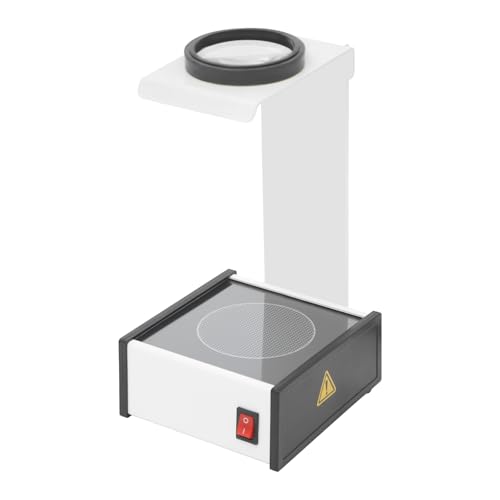
The CP-29B Multi Focal Progressive Lens Tester stands out as an essential tool for opticians and eyewear professionals, thanks to its advanced optical detection technology. This tabletop machine accurately measures key parameters of progressive lenses, giving you reliable data to guarantee lens quality. Built from high-class iron, it’s not only durable and impact-resistant but also designed for a long service life. Its compact size (4.8*4.56*11.81 inches) lets it easily fit on your desktop without cluttering your workspace. Plus, with a user-friendly one-touch switch and straightforward assembly, you’ll find it simple to operate right out of the box.
Best For: The CP-29B Multi Focal Progressive Lens Tester is best for opticians and eyewear professionals looking for a reliable tool to measure and test progressive lenses.
Pros:
- Advanced optical detection technology provides accurate measurements for lens quality assurance.
- Durable construction from high-class iron ensures long-lasting use and impact resistance.
- Compact design allows easy placement on desktops without taking up too much space.
Cons:
- Tabletop design may limit portability for on-site testing.
- Specificity to progressive lenses may not cater to all types of lens testing needs.
- Initial assembly required upon delivery may take some time and effort.
ATN OTS LT Thermal Viewer

Searching for a reliable thermal viewer can be overwhelming, but the ATN OTS LT Thermal Viewer stands out with its next-gen ultra-sensitive sensor and impressive 60Hz refresh rate. This device enhances your long-range performance, ensuring you detect heat signatures effectively. You’ll appreciate the customizable display options, offering White Hot and Black Hot modes to suit your preferences. Its compact and ergonomic design makes it comfortable to use, featuring 25 mm eye relief for safety. Weighing just 1.2 lb, it’s easily portable, and with ultra-low power consumption, you can enjoy over 10 hours of battery life for extended adventures.
Best For: The ATN OTS LT Thermal Viewer is best for outdoor enthusiasts and professionals seeking an effective long-range thermal imaging solution.
Pros:
- Next-gen ultra-sensitive sensor with a 60Hz refresh rate for improved heat signature detection.
- Customizable display options with White Hot and Black Hot modes to suit user preferences.
- Compact and lightweight design at only 1.2 lb, making it easy to carry for extended periods.
Cons:
- Limited advanced features compared to higher-end thermal viewers.
- Battery life may vary depending on usage conditions and settings.
- May require a learning curve for users unfamiliar with thermal imaging technology.
Factors to Consider When Choosing a Binocular Collimation Checker
When choosing a binocular collimation checker, you should think about compatibility with your telescope type and how easy it is to use. Durability and build quality are also essential, especially if you plan to use it outdoors. Don’t forget to check for brightness adjustment features and the clarity of the included instructions for support.
Compatibility With Telescope Types
Choosing the right collimation checker hinges on its compatibility with your telescope type, whether it’s a Newtonian, Dobsonian, or another reflector design. Make certain the checker fits your specific setup by verifying the diameter specifications—some models work with 1.25-inch or 2-inch focusers. If you own multiple telescopes, look for collimators designed for multi-functionality, as they enhance usability across various designs. Also, consider the adjustment and calibration features; some tools come pre-adjusted or have user-friendly interfaces tailored for specific models. Finally, ascertain the construction quality matches the demands of your telescope type. A durable and reliable collimation checker will maintain precise alignment, allowing you to enjoy your stargazing experience without interruptions.
Ease of Use
To guarantee a smooth collimation process, it’s essential to take into account how easy a binocular collimation checker is to use. Look for models that come with clear, step-by-step instructions to simplify alignment for users at any skill level. Choosing devices that are fully adjusted upon purchase saves you from dealing with complex setups. Quick adjustment features are a must, allowing you to achieve proper alignment in just a few minutes. Also, verify the checker is compatible with your telescope’s focuser size to streamline setup. Finally, consider models with adjustable brightness levels for visibility in various lighting conditions, enhancing your overall ease during operation. With these factors, you’ll enjoy a hassle-free collimation experience.
Durability and Build Quality
A collimation checker’s effectiveness is closely tied to its durability and build quality. When choosing one, look for premium materials like anodized aluminum or solid metal construction, as these enhance longevity. A well-constructed checker withstands regular use without sacrificing accuracy, ensuring reliable results over time. It’s also essential to take into account resistance to environmental factors such as moisture and temperature fluctuations, which helps maintain the device’s integrity and prevents misalignment. Additionally, the weight and compactness of the checker impact portability, making it easier to transport for fieldwork. Finally, user-friendly features, like a robust design that allows for easy adjustments, further contribute to both the durability and overall effectiveness during use.
Brightness Adjustment Features
Brightness adjustment features are essential for optimizing the performance of a binocular collimation checker. These features allow you to modify the intensity of the laser beam, enhancing visibility under varying lighting conditions. Many collimation devices provide 5 to 7 brightness levels, which you can adjust based on your environment. This is especially helpful outdoors, where natural light can interfere with the laser dot’s visibility during collimation. In low-light situations, using a lower brightness setting prevents glare and improves accuracy, while higher settings are ideal in bright daylight. With adjustable brightness, you can achieve quicker and more effective collimation, minimizing the need for constant adjustments and ultimately enhancing your overall image clarity.
Included Instructions and Support
When selecting a binocular collimation checker, it is crucial to take into account the included instructions and support, as these can make or break your experience. Many checkers come with detailed instructions that guide you through the alignment process, ensuring ease of use and accuracy. Look for products offering step-by-step procedures, especially if you’re a novice; this can help you achieve proper collimation without prior experience. Multilingual instructions can also enhance accessibility. Additionally, consider whether the product provides support resources, such as customer service or online tutorials, for further assistance. Proper instructions and support can greatly reduce the time and frustration associated with collimating binoculars, leading to a much better viewing experience.