Handling fish safely takes more than a firm grip. The right gloves can help protect your hands from sharp fins, teeth, hooks, scales, and fillet knives while making wet, slippery fish easier to control.
This roundup compares 10 fishing gloves for handling fish, from lightweight guide gloves and textured-grip designs to cut- and puncture-resistant options for cleaning, catching, and filleting.
Best 10 Fishing Gloves for Handling Fish Picks for 2026
Best Slimy-Fish Grip
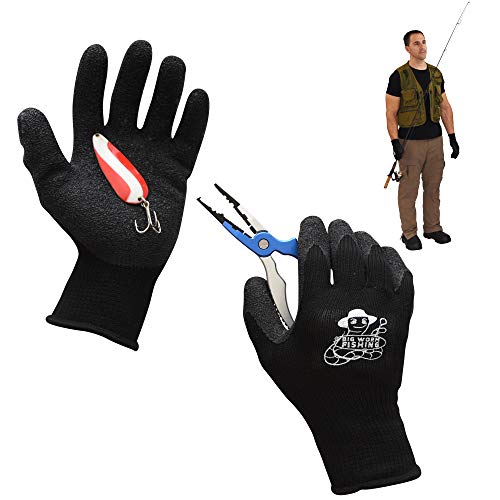
- Textured palm and finger grip
- Useful for fish, bait, and cleaning
- One size fits most L to XL
Best For: Anglers wanting cleaner, more secure fish handling
Best for Filleting Safety

- ANSI level 6 cut resistance
- Rubber grip for wet handling
- Snug fit with extended cuff
Best For: Filleting and cleaning fish with added cut protection
Best for Sunny Guide Days
Fish Monkey Pro 365 Guide Glove

- UPF 50+ sun protection
- Exposed fingertips for dexterity
- Grip palm with cut-resistant pads
Best For: Long, sunny fishing days requiring control and coverage
Best Value Cut Protection

- ANSI A7 cut-resistant construction
- Sandy nitrile grip for wet tasks
- Two pairs with touchscreen compatibility
Best For: Anglers wanting durable protection and a spare pair
Reliable Grip

- Non-slip latex coating for fish handling
- Suitable for fresh- and saltwater use
- Floating and machine washable
Best For: Routine fish handling with easy cleanup
Maximum Protection

- Cut-, puncture-, and hook-resistant design
- Textured palm grips slippery fish
- Machine washable and odor resistant
Best For: Unhooking, filleting, and handling toothy or spiny fish
Convenient Pair
Magnetic Release Fishing Gloves

- Two ambidextrous gloves included
- Anti-slip latex coating with textured grip
- Magnetic hooks and carabiner for carrying
Best For: Catch-and-clean tasks with quick-access storage
Fillet Protection

- Cut-resistant protection for cleaning and filleting
- Textured grip for wet, slippery fish
- Ambidextrous and machine washable
Best For: Fish cleaning and filleting
Magnetic Convenience
Inf-way Cut-Resistant Fishing Gloves

- PE construction resists cuts and punctures
- Non-slip waterproof coating aids grip
- Magnetic release for easy carrying
Best For: Anglers wanting magnetic storage convenience
Heavy-Duty Fish Handling
Lindy SuperFabric Fish Handling Glove

- Puncture-proof and cut-resistant protection
- Durable SuperFabric palm for fish handling
- Reusable and machine washable
Best For: Right-handed anglers handling fish and hooks
Best Slimy-Fish Grip – Textured Fish Handling Gloves
These fishing gloves for handling fish are a straightforward choice for anglers who want a cleaner, more secure way to remove fish from hooks and handle bait. Textured palms and fingers help improve grip on wet, slippery surfaces, while the rubber construction is designed for hand washing.
Best For: Anglers who prioritize grip and keeping fish slime and bait residue off their hands.
Pros:
- Textured grip covers the palms and fingers for handling slippery fish, bait, line, and gear.
- Designed for fish cleaning, filleting, crabbing, and shucking tasks.
- Ambidextrous, pull-on design with a soft lining.
- One-size construction is intended for most large to extra-large hands.
Cons:
- One size may not provide an ideal fit for smaller hands.
- Hand-wash-only care is less convenient than machine-washable options.
- Provides grip-focused protection rather than a stated cut-resistance rating.
This is a practical, no-frills option for routine fish handling and bait work. Choose it when grip and cleanliness matter more than specialized knife protection.
Best for Filleting Safety – KastKing Kut Safe Gloves
For anglers seeking fishing gloves for handling fish alongside knife work, the KastKing Kut Safe emphasizes cut protection and control. Its ANSI level 6 cut-resistant HPPE and metal-wire knit construction is paired with a rubber palm and fingers for a steadier grip on slippery fish and fillet knives.
Best For: Fish cleaning and filleting tasks where cut resistance, knife control, and a secure fit are priorities.
Pros:
- ANSI level 6 cut resistance with 360-degree protection.
- Rubber-coated palm and fingers help improve grip in wet conditions.
- Snug elastic fit and extended seamless ribbed cuff support prolonged wear.
- Synthetic materials are designed for efficient drying and easier cleanup.
Cons:
- The supplied listing specifies size Large rather than a one-size design.
- Hand-wash-only care may require more maintenance.
- Its protective construction may be more than needed for casual bait handling.
This is the more safety-oriented pick in the group for fish cleaning. Its combination of rated cut resistance and a non-slip grip makes it especially relevant when sharp fillet knives are part of the job.
Best for Sunny Guide Days – Fish Monkey Pro 365 Guide Glove
The Fish Monkey Pro 365 Guide Glove suits anglers who want fishing gloves for handling fish while also protecting their hands during long days outdoors. UPF 50+ fabric, exposed fingertips, a synthetic-leather palm, and targeted cut-resistant pads balance sun coverage, dexterity, and wet-weather grip.
Best For: Guides and anglers who need sun protection, fingertip dexterity, and added protection from line cuts and fin pricks.
Pros:
- UPF 50+ protection helps shield hands from UV exposure.
- Exposed fingertips preserve control for knot tying, fish handling, and gear adjustments.
- Non-slip synthetic-leather palm improves rod and reel control when wet.
- Quick-dry fabric and cut-resistant pads support long days on the water.
Cons:
- Exposed fingertips leave those areas uncovered.
- The supplied listing specifies size Large, limiting fit flexibility.
- Hand-wash-only care may be less convenient after frequent use.
This glove is a strong all-around choice for warm, sunny fishing conditions. It favors dexterity and comfort over full-finger coverage, making it less suitable if complete fingertip protection is your main concern.
Best Value Cut Protection – Schwer A7 Fishing Gloves
The Schwer A7 is a useful value-oriented option for fishing gloves for handling fish, lines, wet gear, and sharp tools. The two-pair package combines ANSI A7 cut resistance with a sandy nitrile palm for grip, while touchscreen compatibility lets you use a phone, camera, or GPS without removing the gloves.
Best For: Anglers who want high cut resistance, wet-condition grip, touchscreen access, and a spare pair.
Pros:
- ANSI A7 cut resistance is designed for medium to heavy cut hazards.
- Sandy nitrile coating provides abrasion resistance and grip on wet or slippery surfaces.
- Touchscreen-compatible design supports phone, camera, and GPS use.
- Includes two pairs and is washable and reusable.
Cons:
- The supplied listing specifies size Large.
- Machine-washable care may not suit users who prefer simpler hand washing.
- Heavier-duty protection may feel less streamlined than basic fish-handling gloves.
With two pairs, a high cut-resistance rating, and a durable nitrile grip, this is a compelling option for anglers who regularly switch between fish handling and equipment tasks. It is particularly practical when backup gloves are valuable.
Reliable Grip – Rapala Fisherman's Gloves
For anglers looking for fishing gloves for handling fish, the Rapala Fisherman’s Gloves offer a practical balance of grip, durability, and easy care. Their latex coating is designed for fresh- and saltwater use, while the floating construction can help keep them from sinking if dropped.
Best For: General fish handling in freshwater or saltwater, especially when a washable, slip-resistant glove is preferred.
Pros:
- Non-slip latex coating helps improve grip on fish.
- Designed for both fresh- and saltwater fishing.
- Floating construction can help prevent loss in the water.
- Machine washable for straightforward cleanup.
Cons:
- Listed as one size, so fit adjustability may be limited.
- Provides less specified puncture and cut protection than the reinforced Lindy option.
The Rapala is a sensible everyday choice when grip and maintenance matter most. Its straightforward design suits routine fish handling, but anglers seeking explicitly puncture-proof protection may want a more specialized glove.
Maximum Protection – Lindy Fish Handling Glove
The Lindy Fish Handling Glove is a strong pick among fishing gloves for handling fish when protection is the priority. Its SuperFabric palm is described as cut-, puncture-, and hook-resistant, while the textured surface helps maintain grip on slippery fish during landing, unhooking, cleaning, or filleting.
Best For: Anglers who need reinforced protection while handling hooks, teeth, knives, livewell fish, or fish being cleaned.
Pros:
- Designed to resist cuts, punctures, hooks, knives, and teeth.
- Textured SuperFabric palm supports grip on slippery fish.
- Useful for landing, unhooking, releasing, filleting, and livewell handling.
- Machine washable and resistant to retaining fish odors.
Cons:
- This listing is for a right-hand glove rather than a pair.
- The glove is not waterproof, though it is water repellent.
- The snug, non-stretch fit may require careful sizing.
Choose the Lindy when protective coverage outweighs the simplicity of a basic fishing glove. The single right-hand configuration and sizing requirements are important considerations, but its specified resistance makes it particularly suited to demanding fish-handling tasks.
Convenient Pair – Magnetic Release Fishing Gloves
These two-piece fishing gloves for handling fish combine a latex anti-slip coating with convenient carry features. The waterproof, puncture-resistant, and abrasion-resistant construction is paired with a magnetic hook and carabiner, making the gloves easy to carry between catches.
Best For: Anglers who want an ambidextrous two-glove set for catching, cleaning, and outdoor use with quick access on a belt.
Pros:
- Includes two ambidextrous gloves.
- Latex coating and wrinkle texture enhance grip.
- Described as waterproof, puncture-resistant, and abrasion-resistant.
- Magnetic hooks and included carabiner simplify carrying.
Cons:
- Hand wash only, requiring more involved cleaning than machine-washable alternatives.
- The large-caliber open design may offer less wrist coverage.
- Magnetic closure and accessories add convenience but may not suit anglers wanting a traditional pull-on glove.
This set stands out for convenience and versatility. It is a useful option for anglers who value a pair of gloves, strong grip, and easy belt attachment, provided hand washing is acceptable.
Fillet Protection – Rapala Cut-Resistant Glove
For anglers comparing fishing gloves for handling fish, the Rapala Fillet Glove is designed for cleaning and filleting tasks where cut resistance and grip matter. Its textured surface is intended to help maintain control when handling wet or slippery fish.
Best For: Fish cleaning and filleting, especially when you want an ambidextrous glove that can be reused and machine washed.
Pros:
- Cut-resistant protection helps shield hands from nicks and cuts.
- Textured, non-slip surface supports grip during wet handling.
- Ambidextrous, durable, and machine washable for repeated use.
Cons:
- Listed as one size, which may not suit every hand.
- Designed as a single glove rather than a pair.
This is a practical choice for anglers who prioritize straightforward protection and cleaning convenience. Its one-size, ambidextrous design keeps it flexible, though fit may be the main consideration.
Magnetic Convenience – Inf-way Cut-Resistant Fishing Gloves
These Inf-way fishing gloves for handling fish combine a PE construction with cut- and puncture-resistant features for anglers who need added hand protection. A non-slip surface and magnetic release are included for grip and convenient access.
Best For: Anglers seeking a right-and-left glove setup with magnetic carrying convenience and a focus on slip resistance.
Pros:
- PE material is described as tough, wear resistant, and protective against fish scales and fins.
- Non-slip, waterproof surface is intended to improve holding power.
- Magnetic release supports easy carrying and access, with a stated 3 kg bearing capacity.
Cons:
- Listed size is X-Large, limiting fit options in the supplied details.
- Hand wash only, so cleaning requires more manual care.
- The supplied details identify the hand orientation as right, despite the right-and-left style listing.
The magnetic feature distinguishes this pair from simpler fishing gloves, while the textured coating emphasizes grip. Check the sizing and hand-orientation details carefully before ordering.
Heavy-Duty Fish Handling – Lindy SuperFabric Fish Handling Glove
For anglers evaluating fishing gloves for handling fish, the Lindy Fish Handling Glove focuses on puncture-proof and cut-resistant protection when grabbing fish or working around hooks. Its SuperFabric palm is designed for durable hand coverage.
Best For: Right-handed anglers who want a reusable glove for fish handling, hook-related tasks, and use in varied weather.
Pros:
- Puncture-proof and cut-resistant SuperFabric construction protects during fish handling.
- Designed to help provide a secure hold while handling fish and hooks.
- Reusable, machine washable, and suitable for all-weather use.
Cons:
- This listing is for a right-hand glove.
- The supplied model is Small/Medium, so fit options may be limited.
- It is not listed as waterproof or water resistant.
The Lindy is a strong fit for anglers who prioritize robust puncture and cut protection over waterproofing. Confirm the hand and size selection, particularly if you need a glove for the opposite hand.
How We Picked the Best Fishing Gloves for Handling Fish
We focused on the features that matter most around live fish, hooks, knives, and wet gear: protective materials, grip, fit, dexterity, comfort, and ease of cleaning. The selection includes general-purpose fish-handling gloves, cut-resistant models, puncture-resistant designs, and dedicated fillet gloves.
We also considered practical details such as touchscreen compatibility, magnetic releases, soft linings, ambidextrous designs, and extended sizing. Protection ratings can vary by material and testing standard, so use them as a comparison point rather than a guarantee against every injury.
Quick Comparison
- Best for general fish handling: Choose a glove with a textured palm, secure wrist fit, and water-resistant construction.
- Best for cutting and filleting: Look for certified cut resistance, a snug fit, and enough flexibility to maintain knife control.
- Best for hooks and sharp fins: Prioritize puncture-resistant or reinforced materials, while remembering that no glove replaces careful handling.
- Best for frequent guides and anglers: Favor breathable, quick-drying gloves with durable stitching and reliable grip.
- Best for convenience: Magnetic releases and touchscreen-compatible fingertips can be useful when moving between tackle, phones, and fish.
Key Buying Factors for Fishing Gloves for Handling Fish
Protection Level
Cut-resistant gloves are useful when filleting or working near sharp edges. Puncture-resistant construction is more relevant for spines, teeth, and rough fish. Check the stated rating and coverage, especially around the fingers and palm.
Grip and Control
A textured or coated palm helps secure wet fish and tools. The grip should remain effective without making it difficult to bend your fingers or handle small hooks.
Fit and Dexterity
Loose gloves can reduce control, while overly tight gloves can cause fatigue and restrict movement. Use the manufacturer’s sizing chart and consider whether you need room for a liner.
Comfort and Maintenance
Soft linings, breathable fabrics, and flexible backs make long sessions more comfortable. Rinse gloves after saltwater use, follow the care instructions, and let them dry fully to limit odor and material wear.
Who Should Buy Which Fishing Gloves for Handling Fish?
Occasional anglers should choose a comfortable, general-purpose glove with dependable grip. Serious fish cleaners will benefit from a dedicated cut-resistant fillet glove. Saltwater anglers and guides should look for durable, quick-drying materials and stronger protection against fins and rough scales. Anyone handling toothy or spiny species should prioritize puncture-resistant coverage and a secure fit, while still using appropriate fish-handling tools and techniques.