Camera follow focus systems make it easier to achieve controlled, repeatable focus pulls while shooting video. The right setup can improve precision, reduce camera shake, and fit anything from a compact mirrorless rig to a full cinema build.
This roundup compares 10 options across mechanical, wireless, gimbal-mounted, and LiDAR-assisted designs, so you can match the control method, lens compatibility, and rig format to your production style.
Best 10 Camera Follow Focus Systems Picks for 2026
Advanced Wireless Control
Tilta Nucleus Nano II Power Handle Kit

- Wireless focus, zoom, and aperture control
- Includes two motors and power handle
- Supports up to four motors with optional handle
Best For: Multi-motor filmmaking rigs and advanced on-set control
Compact Manual Control
Hersmay Metal Mini Follow Focus

- Lightweight 188-gram aluminum construction
- A/B stops for repeatable focus changes
- Includes two gears and 15mm rod clamp
Best For: Portable DSLR and mirrorless camera rigs
LiDAR-Assisted Precision
DJI Focus Pro All-in-One Combo

- 20-meter focusing range with LiDAR
- AI recognition for people and vehicles
- FIZ control with hand unit and motor
Best For: Advanced DJI productions and long-range focusing
Gimbal-Mounted Simplicity
Zhiyun TransMount Servo Follow Focus
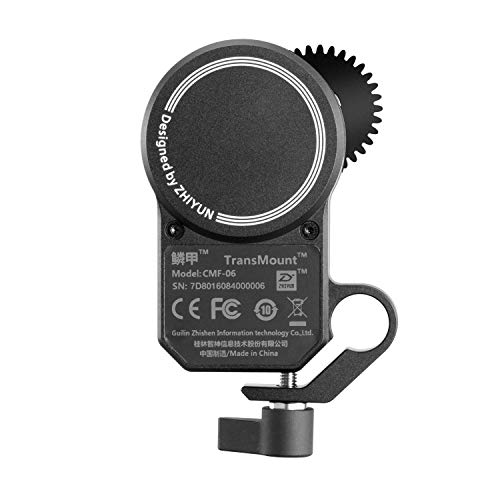
- Designed for compatible Zhiyun gimbals
- Switches between focus and zoom
- 358-gram motor with gimbal-wheel control
Best For: Zhiyun handheld stabilizer users
Smart AF Control

- 20-meter LiDAR focusing range
- AI human and vehicle recognition
- FIZ control plus AMF hybrid focusing
Best For: Solo cinematographers and DJI PRO setups
Dual-Sided Precision

- Dual hand wheels for flexible operation
- Supports 15mm LWS and 19mm studio rods
- Includes ARRI ports and ENG lens gears
Best For: Mechanical DSLR, mirrorless, and cinema rigs
Wireless Lens Mapping
Tilta Nucleus Nano II Base Kit

- Wireless focus, zoom, and aperture control
- Real-time focal-distance lens mapping
- Expandable control for up to four motors
Best For: Wireless camera rigs needing expandable lens control
Best Metal-Build Pick
Fotga DP500III A/B Follow Focus

- CNC-machined metal construction
- Adjustable damping with near-zero backlash
- Includes A/B stops and three gears
Best For: Filmmakers wanting a durable 15mm-rod follow focus
Best Electronic Control Pick
Tilta Nucleus Nano II Hand Wheel

- Touchscreen hand-wheel controller
- Supports multiple compatible motors
- Provides lens mapping and focal distance
Best For: Compatible electronic focus-control workflows
Best Lightweight Pick
Fotga DP3000 Compact Follow Focus

- Lightweight 211 g plastic body
- Adjustable handwheel and 15mm clamp
- Includes A/B stops and three gears
Best For: Compact DSLR and mirrorless video rigs
Advanced Wireless Control – Tilta Nucleus Nano II Power Handle Kit
For creators seeking versatile camera follow focus systems, the Tilta Nucleus Nano II Power Handle Kit combines wireless lens control with camera-setting adjustments and a touchscreen workflow. Its included hand wheel, two motors, power handle, and lens-mapping features make it a substantial option for more involved rigs.
Best For: Filmmakers who need wireless focus, zoom, and aperture control across a multi-motor setup.
Pros:
- Controls focus, zoom, and aperture wirelessly.
- Supports up to four motors when used with the optional Control Handle.
- Lens mapping displays real-time focal-distance information.
- Includes two motors, a power handle, hand wheel, mounting hardware, and carrying case.
Cons:
- The full kit weighs 4.95 pounds and includes numerous components to manage.
- Camera communication is limited to selected compatible Canon, Sony, and Blackmagic Design models.
- Some expansion capability requires an optional Control Handle.
This is the most expandable choice in the group, particularly for productions that need multiple motors and broader on-set control. Verify camera and gimbal compatibility before buying.
Compact Manual Control – Hersmay Metal Mini Follow Focus
The Hersmay Metal Mini Follow Focus is a lightweight choice for shoppers comparing camera follow focus systems for DSLR and mirrorless rigs. Its aluminum-alloy construction, A/B stops, interchangeable gears, and included 15mm rod clamp keep the setup compact and practical.
Best For: DSLR and mirrorless users who want a portable manual follow focus with repeatable focus stops.
Pros:
- Lightweight 188-gram aluminum-alloy construction.
- A/B stops support quick focus-distance switching.
- Includes M0.8-38T and M0.8-43T gears for different lens sizes.
- 15mm rod and NATO clamp allow additional rig accessories.
Cons:
- It is a manual system rather than a wireless motorized controller.
- Compatibility is described broadly for DSLR and mirrorless cameras, so rig fit should be checked.
- It is not water resistant.
Choose this model when portability and straightforward manual operation matter more than electronic control. The A/B stops are especially useful for repeatable pulls in a small rig.
LiDAR-Assisted Precision – DJI Focus Pro All-in-One Combo
The DJI Focus Pro All-in-One Combo stands apart from simpler camera follow focus systems by combining LiDAR ranging, AI subject recognition, and FIZ lens control. With a 20-meter focusing range, hand unit, grip, motor, and carrying case, it targets operators who need both automated assistance and tactile manual control.
Best For: Professional-style DJI setups needing long-range subject focusing and collaborative focus, iris, and zoom control.
Pros:
- Provides a 20-meter maximum subject-focusing range with 76,800 LiDAR ranging points.
- AI recognition supports human and vehicle subject tracking.
- AMF combines autofocus assistance with operator input.
- Controls focus, iris, and zoom and includes a hand unit, grip, motor, LiDAR, and case.
Cons:
- At 2,512 grams, the complete combo is comparatively heavy.
- Compatibility is specifically highlighted for DJI Ronin 4D and Inspire 3 ecosystems.
- Its advanced feature set may be more than needed for basic manual focus pulls.
This is the feature-rich pick for productions that can take advantage of LiDAR and DJI ecosystem integration. It offers the broadest combination of assisted focusing and manual FIZ control here.
Gimbal-Mounted Simplicity – Zhiyun TransMount Servo Follow Focus
The Zhiyun CMF-06 TransMount Servo Follow Focus is a compact addition to compatible Zhiyun gimbals. For users evaluating camera follow focus systems around a handheld stabilizer, its focus/zoom switch, gimbal-wheel control, and stated 100-millisecond latency offer a streamlined way to adjust lenses.
Best For: Zhiyun gimbal users who want compact servo focus or zoom control without a separate handwheel system.
Pros:
- Compact, lightweight 358-gram design.
- Switches between focus and zoom control using an all-function lever.
- Can be controlled through the stabilizer wheel with stated 100-millisecond latency.
- Thicker gears and increased contact area support steadier installation.
Cons:
- Compatibility is limited to specified Zhiyun gimbal models.
- It is a single motor rather than a broader multi-motor system.
- Camera and lens control depends on the compatible stabilizer setup.
This is a focused solution for existing Zhiyun users who prioritize low weight and integrated gimbal operation. Confirm that your exact Weebill or Crane model is supported before ordering.
Smart AF Control – DJI Focus Pro Creator Combo
The DJI Focus Pro Creator Combo is one of the more advanced camera follow focus systems for solo cinematographers and crews working at longer distances. Its LiDAR unit, AI recognition, and hybrid autofocus/manual control are designed to make subject tracking and precise lens adjustments more manageable.
Best For: Solo operators and DJI PRO users who want LiDAR-assisted focusing with manual FIZ control.
Pros:
- LiDAR provides a 20-meter subject-focusing range and 76,800 ranging points.
- AI recognition supports human and vehicle subject tracking.
- AMF mode combines autofocus assistance with operator-controlled focus adjustments.
- Controls focus, iris, and zoom, with compatibility for products such as Ronin 4D and Inspire 3.
Cons:
- Its feature set is most valuable within the DJI PRO ecosystem.
- The included system weighs approximately 1,900 grams.
- It is not water resistant.
Choose this kit when automated subject recognition and long-range LiDAR assistance matter as much as tactile lens control. It is a comprehensive option, particularly for DJI-based production setups.
Dual-Sided Precision – TILTA FF-T04 Follow Focus Kit
The TILTA FF-T04 is a mechanical option among camera follow focus systems, built for DSLR, mirrorless, and cinema camera rigs. Its dual hand wheels and support for both 15mm LWS and 19mm studio rods give operators flexible ways to position and operate the focus control.
Best For: Camera operators who want a dual-sided mechanical follow focus with broad rod-system compatibility.
Pros:
- Dual hand wheels support operation from either side of the camera.
- Compatible with 15mm LWS and 19mm studio rod systems.
- Includes ARRI standard accessory ports and gears for focusing ENG lenses.
- Uses aluminum-alloy and stainless-steel construction.
Cons:
- It provides mechanical control rather than wireless lens operation.
- The system weighs about 1.5 pounds before additional rig components.
- It is not water resistant.
This kit is a practical choice for conventional on-camera focus pulling, especially when a production uses multiple rod standards or benefits from access on both sides of the rig. It is less suited to operators specifically seeking remote control or automated focusing.
Wireless Lens Mapping – Tilta Nucleus Nano II Base Kit
The Tilta Nucleus Nano II Base Kit is a wireless choice among camera follow focus systems, combining a handwheel and motor with a touchscreen interface. It supports wireless focus, zoom, and aperture control, while lens mapping displays focal-distance information to assist with more accurate pulls.
Best For: Filmmakers and camera teams seeking wireless lens control with touchscreen operation and expansion options.
Pros:
- Supports wireless focus, zoom, and aperture control.
- Lens mapping displays real-time focal-distance information.
- The handwheel can control multiple motors, with expansion up to four motors using the optional Control Handle.
- Offers camera communication through Wi-Fi, Bluetooth, and USB-C on selected compatible cameras.
Cons:
- Camera communication features depend on compatible camera models.
- Expansion to four motors requires the optional Control Handle.
- The kit requires a lithium-ion battery.
This kit makes sense for productions that need wireless lens adjustments and room to expand beyond a single motor. Verify camera compatibility before buying, particularly if you plan to use its settings-control features.
Best Metal-Build Pick – Fotga DP500III A/B Follow Focus
For camera follow focus systems, the Fotga DP500III emphasizes durability, adjustability, and precise operation. Its CNC-machined metal construction, adjustable damping, near-zero backlash, A/B hard stops, and included gears make it suited to controlled focus pulls in DSLR, mirrorless, and cinema-style setups.
Best For: Filmmakers who want a sturdy 15mm-rod follow focus with adjustable tension and repeatable A/B stops.
Pros:
- Sturdy CNC-machined metal construction with a rubber-covered handwheel.
- Adjustable damping and less than 0.5 mm of stated backlash.
- Includes A/B hard stops, a quick-release 15mm rod clamp, and three gear sizes.
- Drive gear can be mounted on either side for right- or left-handed operation.
Cons:
- At 500 g, it is heavier than compact plastic alternatives.
- Extra gear sizes are available separately rather than included.
- Requires a compatible 15mm rod setup.
The DP500III is a practical choice when build quality and focus-control flexibility matter more than minimizing rig weight. Its included gear options and adjustable belt broaden lens compatibility, while the A/B stops support repeatable pulls.
Best Electronic Control Pick – Tilta Nucleus Nano II Hand Wheel
Among camera follow focus systems, the Tilta Nucleus Nano II is designed for electronic lens control and broader on-set operation. Its touchscreen hand wheel can control multiple compatible motors, display mapped focal-distance information, and adjust selected camera settings through supported wireless or USB-C connections.
Best For: Crews using compatible Nucleus, DJI, or Ronin systems who want touchscreen control and lens mapping.
Pros:
- Touchscreen interface provides access to advanced control features.
- Supports control of multiple motors, with expansion up to four motors when paired with the optional Control Handle.
- Lens mapping displays real-time focal-distance information for more accurate pulls.
- Compatible with Nucleus M and Nano, DJI Focus Motors, and selected camera and gimbal systems.
Cons:
- Motor expansion requires the optional Control Handle.
- Compatibility is limited to supported motors, gimbals, and selected camera models.
- The supplied package lists a hand wheel and USB-C cable, not motors.
The Nano II is the more feature-focused option here for electronic workflows. It makes the most sense when you already use compatible Tilta or DJI equipment and can benefit from touchscreen control and distance-aware focus pulling.
Best Lightweight Pick – Fotga DP3000 Compact Follow Focus
For buyers comparing camera follow focus systems for a lightweight DSLR or mirrorless rig, the Fotga DP3000 keeps the setup compact and straightforward. It uses a single 15mm-rod clamp, an adjustable handwheel angle, three included gears, and A/B hard stops in a 211 g plastic body.
Best For: DSLR and mirrorless shooters who prioritize low weight, flexible mounting, and basic repeatable focus pulls.
Pros:
- Lightweight 211 g design helps keep a camera rig compact.
- Adjustable handwheel angle and single 15mm clamp allow flexible positioning.
- Includes A/B hard stops, a gear belt, and three gear sizes.
- Non-slip handwheel design and stated zero backlash support controlled operation.
Cons:
- Plastic construction is less substantial than a metal-bodied follow focus.
- Uses a 15mm rail system, so it is not a standalone lens-control solution.
- The listed warranty is three months.
The DP3000 is a sensible entry-level or travel-oriented option when minimizing weight is important. It offers useful focus-pull features without the bulk of a heavier metal unit, though demanding users may prefer a more robust construction.
How We Picked These Camera Follow Focus Systems
We selected systems that cover the main ways videographers control lens focus: traditional mechanical follow focuses, wireless motor kits, dedicated hand-wheel controllers, and gimbal-compatible servo units. We considered compatibility with 15mm rods, NATO rails, DSLR and mirrorless cages, cinema lenses, and supported gimbals. We also looked at practical features such as A/B hard stops, motor count, wireless range, zoom and aperture control, LiDAR assistance, mounting flexibility, and whether the product is best suited to solo operators or a larger crew.
Because these products serve different workflows, the most advanced system is not automatically the best choice. A compact mechanical unit may be preferable for a lightweight rig, while a wireless or automated system can be more useful when the operator cannot reach the lens.
Quick Comparison
| System type | Best suited for | Main advantage | Watch for |
|---|---|---|---|
| Mechanical follow focus | DSLR, mirrorless, and cinema rigs | Simple, responsive, and battery-free | Requires physical access to the lens |
| Wireless single-motor kit | Small crews and solo shooters | Remote focus, zoom, or aperture control | Needs motor, controller, and power planning |
| Multi-motor wireless system | Professional FIZ setups | Controls multiple lens functions | Higher cost and added rig complexity |
| Gimbal servo controller | Stabilized camera movement | Integrates with supported gimbals | Compatibility can be model-specific |
| LiDAR-assisted focus system | Solo operators and subject tracking | Automated distance measurement and focus support | Requires careful calibration and setup |
Key Buying Factors for Camera Follow Focus Systems
Mechanical or Wireless Control
Mechanical units are affordable, immediate, and reliable when the operator can reach the lens. Wireless systems are more flexible for shoulder rigs, jibs, gimbals, and remote camera positions, but require batteries and correctly matched motors.
Lens and Rig Compatibility
Check the lens gear pitch, available clearance, and mounting standard before buying. Many mechanical products use 15mm rods, while wireless motors may clamp directly to rods or a cage. Confirm whether your lens has a compatible focus, zoom, or aperture gear and whether the system supports your camera cage or gimbal.
Stops, Repeatability, and Control Range
A/B hard stops are valuable for repeatable pulls between two marks. For wireless systems, check operating range, latency, motor torque, and the number of functions supported. If you need FIZ control, choose a controller and motor combination designed to handle focus, iris, and zoom rather than assuming every kit supports all three.
Power, Weight, and Balance
Motors, hand wheels, batteries, and cables add weight to a rig. On a gimbal, even a small increase can affect balance and runtime. Compare the complete working setup—not just the listed controller—and leave room for lens changes and accessory mounting.
Who Should Buy Which Camera Follow Focus Systems?
- Choose a basic mechanical model if you want an inexpensive, dependable solution for a DSLR, mirrorless, or cinema camera on 15mm rods.
- Choose a compact wireless kit if you shoot solo, need remote focus, or want to control a lens while the camera is mounted out of reach.
- Choose a multi-motor wireless setup if you need coordinated focus, zoom, and aperture control for a more advanced production.
- Choose a gimbal-specific servo controller when your camera stabilizer is supported and you want lens control without adding a separate hand-wheel workflow.
- Choose LiDAR-assisted focusing if automated subject distance measurement and solo operation matter more than the simplicity of a traditional follow focus.
Before ordering, verify the exact lens gear, rod or rail standard, camera cage, gimbal model, motor placement, and power requirements. Those details determine whether a follow focus system feels precise and dependable or becomes a source of rigging problems.