Wireless camera follow focus systems give filmmakers more precise lens control without requiring a focus puller to stay beside the camera. The right setup can improve focus pulls, support remote operation, and make handheld, gimbal, and cinema-rig workflows more efficient.
This roundup compares 10 options ranging from compact manual follow-focus accessories to advanced systems with multiple motors, LiDAR autofocus, and control over focus, iris, and zoom.
Best 10 Wireless Camera Follow Focus Systems Picks for 2026
Best All-Around Wireless Control
Tilta Nucleus Nano II Base Kit

- Wireless focus, zoom, and aperture control
- Real-time focal-distance information via lens mapping
- Expandable to four motors with optional handle
Best For: Filmmakers needing expandable wireless lens and camera control
Best DJI RS Handle
SmallRig Wireless Follow Focus Handle
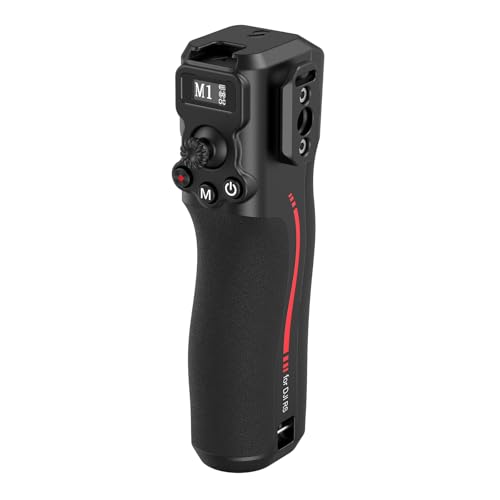
- Works with multiple DJI RS gimbal models
- Up to 100 m range and under 50 ms stated delay
- Up to 10 hours of battery life
Best For: DJI RS users wanting remote focus and gimbal controls
Best LiDAR Autofocus
PDMOVIE Live AIR 4 Smart Follow Focus

- LiDAR autofocus with multiple scan modes
- High-torque motor with three speed levels
- Stores focus presets for five lenses
Best For: Small crews using manual lenses and LiDAR-assisted autofocus
Best Compact Manual Option
SmallRig Mini Follow Focus 3010C

- Lightweight 195–204 g manual design
- Adjustable A/B hard stops
- Includes 15 mm rod clamp and snap-on gear ring
Best For: Compact DSLR and mirrorless rigs needing manual focus control
Best for Solo Cinematographers

- 20-meter LiDAR-assisted focusing range
- AI recognition for people and vehicles
- FIZ control with AMF hybrid focusing
Best For: Solo operators in the DJI PRO ecosystem
Best Gimbal Add-On
FeiyuTech Follow Focus Motor Kit

- Works with multiple SCORP gimbals
- Lightweight 108-gram metal construction
- Manual or automatic calibration
Best For: FeiyuTech SCORP gimbal owners
Best for Comfort

- 15mm rod-mounted compact design
- Quick-release A/B hard stops
- Damped manual focus control
Best For: Manual focus pulls on compact camera rigs
Best LiDAR Autofocus Kit

- Multi-mode LiDAR ranging
- High-torque autofocus motor
- Presets for five lenses
Best For: Independent filmmakers and small crews shooting with manual lenses
Best Compact Control Kit
Nucleus Nano II Control Handle

- Two motors included
- Lens mapping with focal distance
- Wireless focus, zoom, and aperture
Best For: Creators wanting a compact multi-motor hand-wheel system
Best Cinema FIZ System

- Focus, iris, and zoom control
- Lens mapping and marking disks
- Works with earlier Nucleus systems
Best For: Cinema operators needing production-oriented wireless FIZ control
Best All-Around Wireless Control – Tilta Nucleus Nano II Base Kit
The Tilta Nucleus Nano II Base Kit is a versatile choice among wireless camera follow focus systems, combining a handwheel, motor, touchscreen, and lens-mapping features. It supports wireless focus, zoom, and aperture control, while selected camera models can also receive setting adjustments through Wi-Fi, Bluetooth, or USB-C.
Best For: Filmmakers who want expandable wireless lens control with camera communication and real-time focus-distance information.
Pros:
- Controls focus, zoom, and aperture wirelessly.
- Lens mapping displays real-time focal-distance information for more accurate pulls.
- Can expand to control up to four motors with the optional control handle.
- Touchscreen provides access to advanced features and workflow controls.
Cons:
- Some camera communication features work only with selected compatible models.
- Additional expansion to four motors requires the optional control handle.
- At 2.43 pounds, it is less lightweight than a minimal single-motor setup.
Choose this kit if you need more than basic focus pulling and value compatibility with multiple Tilta and DJI motor ecosystems. Its touchscreen and lens mapping make it especially useful for repeatable, precise pulls on more involved productions.
Best DJI RS Handle – SmallRig Wireless Follow Focus Handle
The SmallRig Handle with Follow Focus is a practical accessory for DJI RS-series users seeking wireless camera follow focus systems in a handheld form. Its focus dial works with the compatible wireless receiver motor, while the handle also provides recording, shutter, joystick, mode, centering, and power controls.
Best For: DJI RS 2, RS 3 Pro, RS 4, RS 4 Pro, and RS 5 users who want an ergonomic remote handle for gimbal-based shooting.
Pros:
- Designed for a broad range of DJI RS gimbals, including RS 5.
- Wireless range reaches up to 100 meters with stated latency below 50 milliseconds.
- Up to 10 hours of battery life under normal working conditions.
- Includes 1/4-inch locating holes, a cold shoe, and NATO mounting features.
Cons:
- It requires the compatible wireless receiver motor for focus control.
- The handle has a 2.0 kg maximum payload, while the receiver supports up to 4.0 kg.
- It is not water resistant.
This is a strong fit for operators already using a supported DJI RS gimbal. The long wireless range, low stated delay, and integrated camera controls make it more capable than a focus-only handgrip, though its ecosystem compatibility is narrower than a standalone lens-control kit.
Best LiDAR Autofocus – PDMOVIE Live AIR 4 Smart Follow Focus
The PDMOVIE Live AIR 4 Smart is a distinctive option among wireless camera follow focus systems because it combines wireless lens control with LiDAR autofocus. Its ranging module offers multiple scan modes, and the high-torque motor is designed for responsive autofocus across indoor and outdoor shooting distances.
Best For: Independent filmmakers and small crews using manual lenses who want LiDAR-assisted autofocus and portable setup.
Pros:
- LiDAR supports multiple scan modes for short- and long-range shooting.
- High-torque motor is designed for rapid, frame-by-frame autofocus response.
- Three motor-speed levels accommodate different shooting requirements.
- Can store focus presets for up to five lenses.
Cons:
- The basic kit includes the controller and motor, so the system is centered on LiDAR autofocus rather than a traditional handwheel workflow.
- Its four included lithium-ion batteries require charging and management on set.
- Advanced master-slave functionality is intended for connection with a previous-generation Bluetooth motor.
Consider this system when autofocus assistance is more valuable than conventional manual pulling. The LiDAR modes, preset storage, and wireless operation make it appealing for mobile crews working with manual or cine lenses in changing environments.
Best Compact Manual Option – SmallRig Mini Follow Focus 3010C
The SmallRig Mini Follow Focus 3010C is a compact, non-motorized alternative to wireless camera follow focus systems. It provides direct manual focus control, adjustable A/B hard stops, a snap-on gear ring, and a 15mm rod clamp for DSLR and mirrorless camera rigs.
Best For: Handheld, tripod, and compact DSLR or mirrorless setups that need precise manual focus without wireless electronics.
Pros:
- Lightweight design weighs about 195–204 grams.
- Adjustable A/B stops can be locked or disabled for limited or 360-degree operation.
- Modular mounting supports left- or upper-side installation and included 15mm rod hardware.
- Interchangeable M0.8 gears and the included gear ring accommodate different lens diameters up to 114 mm.
Cons:
- It is a manual follow focus, not a wireless control system.
- Additional gears and seamless focus rings are optional accessories.
- It is intended for compatible DSLR and mirrorless rigs rather than remote operation.
This is the sensible budget-and-weight alternative for shooters who do not need wireless control. Its adjustable stops, damping-focused ergonomic design, and modular mounting provide useful pulling control while keeping the rig simple and portable.
Best for Solo Cinematographers – DJI Focus Pro Creator Combo
For demanding wireless camera follow focus systems, the DJI Focus Pro Creator Combo combines LiDAR-assisted focusing, subject recognition, and hands-on lens control. Its 20-meter focusing range and 76,800 ranging points make it suited to operators who need reliable focus support across extended shooting distances.
Best For: Solo cinematographers and crews using the DJI PRO ecosystem who want autofocus assistance alongside precise manual control.
Pros:
- LiDAR provides a 20-meter maximum subject-focusing range with 76,800 ranging points.
- AI recognition supports human and vehicle subject tracking.
- AMF mode combines autofocus precision with operator input.
- FIZ control handles focus, iris, and zoom with tactile magnetic damping.
Cons:
- Compatibility is specifically highlighted for DJI Ronin 4D and Inspire 3.
- The 1,900-gram listed weight makes it less appealing for minimalist setups.
- It is not water resistant.
This is the most feature-rich option here, particularly for DJI-based productions. The LiDAR waveform and hybrid AMF controls add useful focus information and flexibility, while the included LiDAR, grip, motor, and carrying case create a ready-to-use package.
Best Gimbal Add-On – FeiyuTech Follow Focus Motor Kit
The FeiyuTech Follow Focus Brushless Motor Kit is a compact way to add lens focus or zoom control to compatible SCORP gimbals. As wireless camera follow focus systems go, it is aimed at users who already own a supported FeiyuTech stabilizer and want control from the gimbal’s multifunctional dials.
Best For: FeiyuTech SCORP 3, SCORP 2, SCORP-C2, SCORP Pro, and related gimbal users seeking a lightweight motorized lens-control upgrade.
Pros:
- Compatible with several FeiyuTech SCORP series gimbals.
- Lightweight metal construction is listed at 108 grams.
- Supports manual focus or focal-length adjustment.
- Offers automatic or manual calibration and reversible motor direction.
Cons:
- It is designed around FeiyuTech SCORP gimbals rather than a broad standalone setup.
- Lens compatibility is limited to lenses with a maximum diameter of 10 centimeters.
- It is not water resistant.
This kit makes the most sense when you already use a compatible SCORP stabilizer. Its brushless motor, quick mounting, and calibration options add practical lens control without much weight, but it is less flexible than a universal follow-focus platform.
Best for Comfort – Tilta Pocket Follow Focus
The Tilta Pocket Follow Focus is a compact manual alternative for filmmakers who want tactile lens control without adding a motor. Among wireless camera follow focus systems, it is better understood as a simple, rod-mounted mechanical solution with adjustable stops and interchangeable gears.
Best For: Camera operators who prefer direct manual focus pulls on compatible cameras and lenses using a 15mm rod setup.
Pros:
- Compact design uses a single 15mm rod for broad system compatibility.
- Quick-release A/B hard stops help repeatable focus pulls.
- Interchangeable gears accommodate lenses with different gear-ring sizes.
- Fluid damping and a non-slip grip provide tactile focus control.
Cons:
- It is a manual follow-focus unit, not a motorized wireless controller.
- It requires a compatible 15mm rod mounting arrangement.
- It is not water resistant.
The Tilta Pocket Follow Focus is a practical choice for controlled, hands-on shooting where wireless operation is not essential. Its A/B stops, damping, included gear ring, rod holder, and compact case make it a straightforward kit for repeatable manual pulls.
Best LiDAR Autofocus Kit – Live AIR 4 Deluxe
The PDMOVIE Live AIR 4 Deluxe is a strong option for filmmakers comparing wireless camera follow focus systems with LiDAR-assisted autofocus. Its ranging module offers multiple scan modes, while the high-torque motor and three speed settings help maintain responsive focus during changing shots.
Best For: Independent filmmakers and small crews needing portable, wireless LiDAR autofocus for manual or cine lenses.
Pros:
- Multiple LiDAR scan modes support short-range indoor and long-range outdoor shooting.
- High-torque motor provides rapid, frame-by-frame autofocus response.
- Stores focus presets for up to five lenses and supports three motor speeds.
- Master-slave mode can connect the LiDAR unit with a previous-generation Bluetooth motor.
Cons:
- The system requires six included lithium-ion batteries.
- At 3.09 pounds, the deluxe kit is less lightweight than a basic motor-only setup.
Choose this kit when automated focus assistance and flexible LiDAR control matter more than minimizing kit size. Its plug-and-play design is particularly practical for location work.
Best Compact Control Kit – Nucleus Nano II Control Handle
The Tilta Nucleus Nano II Control Handle Kit is a versatile choice among wireless camera follow focus systems, combining a hand wheel, control handle, and two motors. It supports wireless focus, zoom, and aperture control, while lens mapping displays focal-distance information for more deliberate focus pulls.
Best For: Shooters who want a compact hand-wheel setup with multiple motors, touchscreen access, and selected camera-control features.
Pros:
- Includes two motors and can expand to control up to four motors with the control handle.
- Lens mapping displays real-time focal-distance information.
- Supports wireless focus, aperture, and zoom control.
- Offers camera communication through Wi-Fi, Bluetooth, and USB-C on selected compatible cameras.
Cons:
- Camera-control compatibility is limited to selected Canon, Sony, and Blackmagic Design models.
- Advanced expansion to four motors requires additional equipment.
This kit is a practical middle ground for users who need more than a single-axis follow focus. Verify camera and motor compatibility before relying on its camera-control functions.
Best Cinema FIZ System – Nucleus-M II Hand Wheel Kit
The Tilta Nucleus-M II Hand Wheel Kit is designed for cinema workflows that need wireless camera follow focus systems capable of controlling focus, iris, and zoom. Its FIZ hand unit, lens mapping, marking disks, and support for 0.8 or 0.5 gear pitches make it suited to multi-axis lens control.
Best For: Cinema-camera operators and focus pullers who need wireless FIZ control across focus, iris, zoom, and compatible ND motors.
Pros:
- Supports wireless control of focus, iris, zoom, and an ND motor.
- Lens mapping can save and display focus, iris, and zoom information.
- Provides wireless adjustment of ISO, white balance, and shutter speed.
- Integrates with previous Nucleus-M and Nano II systems.
Cons:
- The 4.4-pound kit is substantially heavier than compact hand-wheel systems.
- The supplied configuration includes one Nucleus-M II motor rather than a complete multi-motor set.
- It is a more specialized setup for users who need cinema-style FIZ control.
Consider this kit when precise, multi-axis cinema control and ecosystem compatibility are priorities. Its included marking disks, hand unit, cables, mounts, and case support a more production-oriented workflow.
How We Picked These Wireless Camera Follow Focus Systems
We selected systems across several shooting styles and budgets, prioritizing control accuracy, wireless range, motor compatibility, mounting flexibility, power options, and ease of setup. We also considered whether each system is best suited to manual focus pulling, gimbal work, solo operation, or more complex cinema-camera rigs.
The selection includes compact solutions such as the SmallRig and Tilta Pocket systems, modular options from Tilta and FeiyuTech, and advanced autofocus-focused products from DJI and PDMOVIE. Because lenses, cameras, and rigs vary widely, compatibility should be confirmed before purchase.
Quick Comparison
- Best for modular lens control: Tilta Nucleus Nano II systems.
- Best for advanced autofocus assistance: DJI Focus Pro and PDMOVIE Live AIR 4 systems.
- Best for compact rigs: SmallRig Mini Follow Focus and Tilta Pocket Follow Focus.
- Best for gimbal handles: SmallRig Handle with Follow Focus.
- Best for multi-motor cinema setups: Tilta Nucleus-M II Hand Wheel Kit.
Key Buying Factors for Wireless Camera Follow Focus Systems
Lens and Camera Compatibility
Check the lens gear pitch, available mounting points, camera-control support, and whether the motor can physically reach the lens ring. Some systems are designed for standard cine lenses, while others can work with still-photo lenses when a compatible gear ring is added.
Manual Control Versus LiDAR Autofocus
A traditional wireless motor is ideal when an operator wants direct, repeatable focus pulls. LiDAR-assisted systems can help solo filmmakers track subjects or establish focus distances, but they usually cost more and may require additional calibration, sensors, or app and camera integration.
Motor Count and Functions
One motor may be enough for focus. More advanced rigs can add separate motors for focus, iris, and zoom. Multiple motors increase creative control but also add weight, power demands, setup time, and potential compatibility considerations.
Mounting, Power, and Range
Confirm whether the system uses 15mm rods, a dedicated handle, a cage, or a gimbal mount. Consider battery type, charging convenience, operating time, wireless range, and the total weight added to your camera. A lightweight system is often preferable for handheld and gimbal work.
Who Should Buy Which Wireless Camera Follow Focus Systems?
Choose a compact manual system if you want affordable, tactile focus control for a small camera or gimbal. Choose a modular Tilta or FeiyuTech setup if you expect to expand into additional motors or accessories. Choose DJI or PDMOVIE if you shoot solo and want subject-distance assistance or LiDAR-based focusing. Choose a multi-motor cinema system if your production requires coordinated focus, iris, and zoom control from one hand unit.
Before ordering, match the system to your lens gearing, camera support, rig weight, and operating style. The best choice is not necessarily the most advanced model—it is the one that delivers reliable control without complicating your setup.