The best camera viewfinders make framing easier when bright sunlight, awkward angles, or a small screen gets in the way. This roundup covers LCD magnifiers, optical finders, waist-level designs, and eyepiece accessories for different shooting styles.
Use the comparison and buying advice below to match the right viewfinder to your camera, lens, preferred focal length, and shooting conditions.
Best 10 Camera Viewfinders Picks for 2026
Best LCD Magnifier

- 3x focusable LCD magnification
- Blocks light in bright conditions
- Reversible eyecup fits eyeglasses
Best For: Outdoor LCD viewing and focusing
Best Compact Optical Option

- Precise 35mm framelines
- Multi-coated four-element optics
- 25g cold-shoe-mounted design
Best For: Compact 35mm street and travel shooting
Best Waist-Level Design
CHI Sight 28mm Optical Viewfinder

- Mirrored waist-level viewing
- 28mm view with 35mm/50mm frames
- Battery-free optical construction
Best For: Classic waist-level street and travel composition
Best Universal 3.2-Inch LCD Hood
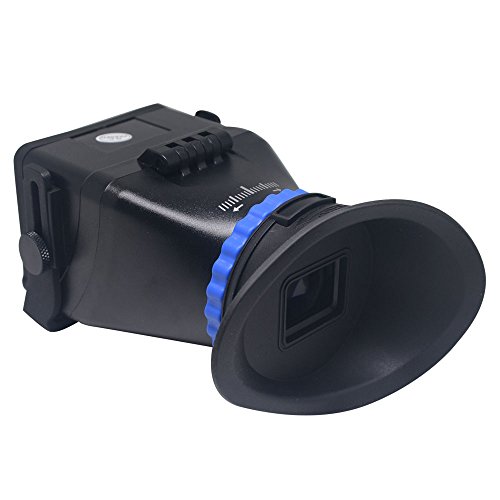
- 3x LCD magnification
- Collapsible, light-blocking hood
- Diopter and reversible eyecup
Best For: Video monitoring on compatible 3.2-inch screens
Best Retro Optical Add-On
SmallRig 28mm External Viewfinder

- Bright five-group optical glass
- Built-in 3:2 frame lines
- Wide camera compatibility
Best For: Compatible cameras needing a fixed 28mm-equivalent optical view
Best Comfort Upgrade

- Soft silicone eye cushion
- Blocks stray light and glare
- Simple slide-on installation
Best For: Compatible Canon cameras needing a more comfortable eyepiece
Best Waist-Level Framing

- Supports low-angle composition
- Switchable 35mm/50mm framelines
- Magnetic light-blocking hood
Best For: Candid and dynamic low-angle photography
Best Wearable Camera Viewfinder
Godox C100 Transparent Pocket Camera

- Transparent optical viewfinder with HUD overlays
- Built-in film light meter and digital camera
- 65g body with four aspect ratios
Best For: Portable creative shooting and film exposure reference
Best Waist-Level Camera Viewfinder
Retropia Optical Waist Level Viewfinder

- Battery-free optical viewing
- 28mm, 35mm, and 50mm frame lines
- Tool-free standard hot shoe mounting
Best For: Vintage-style waist-level composition on DSLR or mirrorless cameras
Best Metering Camera Viewfinder

- Transparent optical viewfinder with shooting data
- Built-in center-weighted light meter
- 32GB card included; expandable to 128GB
Best For: Compact metering and creative composition with included storage
Best LCD Magnifier – Kamerar CVF-2 3X Viewfinder
The Kamerar CVF-2 is a practical choice among camera viewfinders for photographers and videographers who need a clearer LCD image outdoors. Its 3x magnification and light-blocking design make manual viewing and focusing easier on compatible 3.0-inch and 3.2-inch 16:9 screens.
Best For: Outdoor shooting, LCD-based focusing, and users who wear glasses.
Pros:
- 3x focusable magnification provides a sharp, enlarged LCD view.
- Blocks excess light for improved contrast in bright sunlight.
- Reversible eyecup works with either eye and accommodates eyeglasses.
- Adjustable rubber bands mount it without leaving marks.
Cons:
- Compatibility is centered on 3.0-inch and 3.2-inch 16:9 LCD screens.
- It adds an external viewing accessory to the camera setup.
Choose the CVF-2 if your main priority is enlarging and shading a compatible rear screen. It is especially useful when bright conditions make the camera’s built-in LCD difficult to assess.
Best Compact Optical Option – TTArtisan 35mm Viewfinder
The TTArtisan 35mm is one of the more compact camera viewfinders for photographers who prefer an external optical framing tool. Its 35mm framelines, multi-coated optics, and standard cold-shoe mount suit rangefinder-style composition without adding electronics.
Best For: Street, travel, and rangefinder-style photography using a 35mm perspective.
Pros:
- Precise 35mm framelines show the intended framing perspective.
- Four-element, multi-coated optics support clear viewing and light transmission.
- Lightweight 25g aluminum body is easy to carry.
- Soft rubber eyecup improves viewing comfort.
Cons:
- It provides a fixed 35mm frame rather than multiple focal-length options.
- It is an optical framing accessory, not an electronic display or focusing aid.
The TTArtisan is a focused pick for photographers who know they want 35mm framing and a minimal, classic accessory. Its low weight and cold-shoe compatibility make it convenient for daily carry.
Best Waist-Level Design – CHI Sight 28mm Optical Viewfinder
The CHI Sight offers a distinctive waist-level approach to camera viewfinders, displaying a horizontally mirrored image for natural low-position composition. It combines a 28mm viewing angle with internal 35mm and 50mm frame lines, making it useful for photographers who want several framing references without batteries or screen delay.
Best For: Street, travel, and waist-level shooting in changing outdoor light.
Pros:
- Mirrored waist-level image supports a classic shooting experience.
- Includes 28mm viewing with 35mm and 50mm internal frame configurations.
- Detachable hood helps reduce flare in direct sunlight.
- Battery-free optical design avoids electronic interference and screen delay.
Cons:
- The horizontally mirrored image may require an adjustment period.
- Its waist-level viewing style is specialized compared with a conventional eye-level finder.
Pick the CHI Sight when the shooting experience matters as much as basic framing. Its multiple frame references, hood, and battery-free optical construction give it a strong niche for deliberate outdoor composition.
Best Universal 3.2-Inch LCD Hood – ST-1 Collapsible Viewfinder
The ST-1 is a versatile LCD accessory for DSLR and mirrorless users comparing camera viewfinders for video or outdoor screen monitoring. It offers 3x magnification, a collapsible hood, diopter adjustment, and a reversible eyecup for compatible 3.2-inch LCD screens.
Best For: Dynamic video shooting and clearer monitoring on compatible 3.2-inch camera screens.
Pros:
- 3x magnification enlarges the LCD image for easier viewing.
- Light-blocking hood improves visibility outdoors.
- Reversible eyecup supports left- or right-eye use and can be flipped up.
- Diopter adjustment and included baseplate support flexible setup.
Cons:
- Compatibility is intended for 3.2-inch LCD screens and listed compatible cameras.
- At 11.3 ounces, it is heavier than the compact optical viewfinders here.
- Its larger baseplate and strap make it a more involved accessory to carry.
The ST-1 makes the most sense for users who need a magnified, shaded LCD during video or dynamic shooting. Confirm your camera’s 3.2-inch screen compatibility before buying, since fit is central to its usefulness.
Best Retro Optical Add-On – SmallRig 28mm External Viewfinder
The SmallRig 5873 is a practical choice among camera viewfinders when you want an optical framing aid and a classic shooting experience. Its bright five-group glass, 3:2 frame lines, and broad compatibility make it useful for composing without relying solely on the camera screen.
Best For: Photographers using compatible Fujifilm, Nikon, Canon, Sony, Ricoh, or Leica cameras who want a fixed 28mm-equivalent optical framing view.
Pros:
- High-transmission optical glass provides a clear, bright view with minimal distortion.
- Built-in 3:2 frame lines support more deliberate composition.
- Cold-shoe mounting and a silicone protective pad help simplify installation and protect the shoe.
- Supports a wide range of compatible camera bodies.
Cons:
- The fixed -0.52D diopter may not suit every user’s eyesight.
- The 28mm full-frame view is not adjustable, and APS-C users may need an 18mm lens for matching framing.
Choose this model if optical clarity, a compact retro setup, and broad camera compatibility matter more than adjustable magnification or electronic information.
Best Comfort Upgrade – Long Soft EF Eyecup
This long silicone eyecup is a simple camera viewfinder accessory for Canon users who want a more comfortable, better-shielded viewing experience. Its extended design helps fit around the eye, whether shooting without glasses or while wearing them.
Best For: Canon Rebel T7, T6, EOS 90D, and 80D users seeking added comfort and improved stray-light control.
Pros:
- Soft, thick silicone conforms comfortably around the eye.
- Helps block stray light for better contrast and reduced glare.
- Extended shape can help keep nose smudges off the LCD screen.
- Slides on and clicks into place for straightforward installation.
Cons:
- Compatibility is limited to the listed Canon camera models.
- It upgrades viewing comfort but does not provide optical framing or camera information.
This is a focused, low-weight upgrade for improving the feel of an existing Canon viewfinder, particularly during outdoor shooting or longer sessions.
Best Waist-Level Framing – ULANZI VF01 28mm Viewfinder
The ULANZI VF01 stands out among camera viewfinders for low-angle and candid work. Its waist-level design, magnetic hood, and switchable 35mm/50mm framelines provide a more deliberate way to preview compositions while adding a retro aluminum-and-leather look.
Best For: Photographers who want low-angle framing, a 28mm full-frame view, and switchable 35mm or 50mm composition guides on a cold-shoe-equipped camera.
Pros:
- Waist-level design makes low-angle composition more natural.
- Three-element, three-group lens is designed for a sharp, high-transmission view.
- Switchable bright 35mm and 50mm framelines add composition flexibility.
- Magnetic flip-open hood helps block stray light quickly.
Cons:
- Its 28mm full-frame view and framelines are fixed viewing options rather than an electronic display.
- The cold-shoe mount is universal in design, but the supplied notes do not identify specific camera-body compatibility.
Consider the VF01 when shooting style and low-angle usability are priorities. It is especially appealing for candid or dynamic photography where a waist-level perspective can make framing more discreet.
Best Wearable Camera Viewfinder – Godox C100 Transparent Pocket Camera
The Godox C100 is a highly portable option for shoppers comparing camera viewfinders with a creative, see-through shooting experience. Its transparent optical viewfinder overlays framing grids and exposure information while letting you see the scene directly, and the 65g body is easy to carry for street photography, travel, or casual video.
Best For: Film photographers, street shooters, travelers, and creators who want a lightweight pocket camera with a built-in light meter.
Pros:
- Transparent optical viewfinder provides an immersive view of the real scene with HUD information.
- Combines a center-weighted film light meter with a compact digital camera.
- Supports photo and video capture in four aspect ratios, including 1:1, 3:2, 4:3, and 16:9.
- USB-C OTG transfer and expandable TF card storage up to 128GB add convenience.
Cons:
- Its 1MP listed photo resolution is modest compared with conventional digital cameras.
- No built-in flash and no stated water resistance.
- The compact viewfinder and automatic controls may not suit users seeking extensive manual camera control.
Choose this Godox when portability and the unusual transparent-viewfinder experience matter more than high-resolution image quality. It is particularly appealing as a creative accessory and exposure aid for analog photographers.
Best Waist-Level Camera Viewfinder – Retropia Optical Waist Level Viewfinder
The Retropia Optical Waist Level Viewfinder is a simple accessory for photographers seeking camera viewfinders that work without batteries or screens. It mounts directly to a standard hot shoe and provides a top-down composition method with built-in 28mm, 35mm, and 50mm frame lines.
Best For: DSLR and mirrorless users who want a vintage waist-level shooting style for street, portrait, and everyday photography.
Pros:
- Compatible with standard hot shoe mounts on many Canon, Sony, Nikon, Fujifilm, Leica, Panasonic, and Olympus cameras.
- Purely optical design requires no batteries, charging, or screen.
- Built-in 28mm, 35mm, and 50mm frame lines help with quick composition.
- Tool-free hot shoe mounting removes easily without screws or modifications.
Cons:
- It is a composition aid rather than an electronic viewfinder with exposure or focus information.
- Compatibility depends on having a standard hot shoe mount.
- The supplied notes do not specify optical magnification or adjustment options.
This Retropia is a good fit if you want a glare-free, always-ready framing tool and enjoy shooting from the waist. Its fixed optical approach is intentionally limited, but that simplicity is also its main advantage.
Best Metering Camera Viewfinder – Godox C100 with 32GB TF Card
The Godox C100 bundle is worth considering among camera viewfinders for photographers who want transparent composition, exposure references, and included storage in one compact device. Its optical viewfinder displays the scene alongside shooting information, while the built-in meter provides ISO, aperture, and shutter-speed guidance.
Best For: Analog photographers and compact-camera users who want an integrated light meter, multiple composition formats, and a pre-installed 32GB TF card.
Pros:
- Transparent viewfinder combines direct scene viewing with key shooting information.
- Center-weighted metering offers ISO 100–800, aperture f/1.0–f/64, and shutter-speed reference ranges from 1/8000s to 1s.
- Photo, video, and metering modes support 16:9, 3:2, 4:3, and 1:1 composition frames.
- Includes a 32GB TF card and supports expansion up to 128GB.
Cons:
- OTG file viewing disables shooting, recording, and metering until the camera is disconnected and restarted.
- No flash, carry pouch, or power adapter is included according to the supplied notes.
- The specifications contain conflicting size and weight information, so buyers should verify the listing details.
This version stands out for its included card and exposure-oriented feature set. It is a practical choice for users who value a transparent viewing experience and light-meter references, provided they understand the OTG workflow limitation.
How We Picked These Camera Viewfinders
We selected options across the main viewfinder categories: LCD loupe magnifiers, external optical finders, waist-level viewfinders, camera-specific eyecups, and compact viewing accessories. We considered compatibility, magnification or framing support, mounting method, portability, visibility in bright conditions, and how easily each design can be used in real shooting situations.
Because viewfinder needs vary widely, this list includes both dedicated optical accessories and products intended to improve screen-based composition. Check the stated camera, screen size, cold-shoe, and focal-length compatibility before purchasing.
Quick Comparison
| Type | Best For | Key Advantage |
|---|---|---|
| LCD viewfinder loupe | DSLR and mirrorless video or live view | Magnifies and shades the rear screen |
| External optical viewfinder | Street and rangefinder-style photography | Fast, bright framing without using the rear display |
| Waist-level viewfinder | Low-angle and discreet shooting | Comfortable viewing from a lower position |
| Eyecup or eyepiece | Compatible camera viewfinders | Improves eye comfort and light blocking |
Key Buying Factors for Camera Viewfinders
Compatibility and Mounting
Start with the physical connection. Cold-shoe models need a compatible shoe, while LCD loupes must fit the screen dimensions and mounting frame. Camera-specific eyecups require the exact body or eyepiece series. A universal label does not guarantee a secure or comfortable fit.
Optical Coverage and Framing
External finders are usually designed around particular focal lengths, such as 28mm, 35mm, or 50mm. Choose a finder that matches the lens or field of view you use most. If it includes switchable framelines, confirm that the available settings suit your lenses.
Visibility and Magnification
For rear-screen shooting, 3x magnification can make focusing and composition easier, while a hood or loupe helps reduce reflections in sunlight. Optical finders should provide clear glass, accurate enough framing, and useful glare control. Remember that an external optical finder may not show focus, exposure, or depth-of-field changes.
Size, Comfort, and Portability
Waist-level and collapsible designs can be convenient, but added bulk may affect how easily a camera fits in a bag. Consider whether you need a permanent accessory, a flip-up option, or a lightweight finder that can be removed between shots.
Who Should Buy Which Camera Viewfinders?
Choose an LCD magnifier if you compose through a camera screen, record video, or frequently shoot outdoors. Choose an optical cold-shoe finder if you want quick, distraction-free framing for street, travel, or fixed-focal-length photography. Choose a waist-level model for low-angle compositions, discreet shooting, or a classic viewing experience. Choose an eyecup when your main problem is eye comfort or stray light around an existing electronic or optical viewfinder.
Before ordering, verify the product’s screen size, camera compatibility, focal-length markings, mounting hardware, and return policy. The right match should improve framing without making your camera awkward to carry or use.