When you’re out in the wild, staying connected can be essential for your safety and success. The right GPS communicator can make all the difference, providing navigation and communication when you need it most. In 2025, several high-quality devices are designed specifically for hunters like you. From reliable two-way messaging to advanced mapping features, these tools can enhance your outdoor experience. So, which ones should you consider for your next adventure?
Garmin GPSMAP 65 Handheld GPS

If you’re an avid hunter seeking precision in navigation, the Garmin GPSMAP 65 Handheld GPS is your ideal companion. This button-operated GPS measures 6.3 x 2.4 x 1.4 inches and weighs just 7.7 ounces, making it easy to carry. With its 2.6” sunlight-readable color display, you can easily view maps even in bright conditions. Featuring expanded global navigation satellite systems and multi-band technology, it delivers peak accuracy in tough terrains like steep country and dense forests. Plus, with Bluetooth and ANT+ connectivity, you can manage your routes and waypoints seamlessly using the Garmin Explore app.
Best For: Avid hunters and outdoor enthusiasts seeking precision navigation in challenging terrains.
Pros:
- Expanded GNSS support for improved accuracy in difficult environments.
- Lightweight and portable, making it easy to carry on long trips.
- Sunlight-readable display ensures visibility in bright outdoor conditions.
Cons:
- Requires 2 AA batteries, which may need frequent replacement.
- Limited internal storage for maps compared to some other models.
- Smartphone required for full functionality with the Garmin Explore app.
ZOLEO Satellite Communicator – Two-Way Global SMS Text Messenger & Email
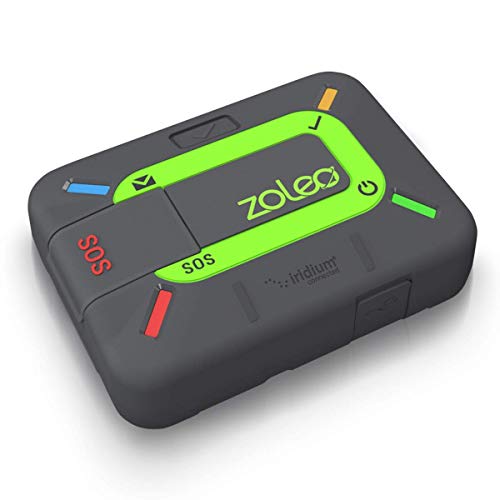
Hunters venturing into remote areas will find the ZOLEO Satellite Communicator an invaluable tool for staying connected. It enables global satellite messaging, letting you transmit texts and emails over the Iridium network, cellular, or Wi-Fi, using the most cost-effective option available. You’ll receive a dedicated SMS number and email for direct contact off the grid. With SOS alerts and GPS location sent to emergency services, plus unlimited check-ins, safety’s a priority. Built to last with an IP68 rating and boasting over 200 hours of battery life, ZOLEO’s affordable service plans guarantee you’re never truly alone in the wild.
Best For: Hunters and outdoor enthusiasts venturing into remote areas who need reliable communication and emergency support.
Pros:
- Provides global satellite messaging beyond cell coverage, ensuring connectivity in remote locations.
- Features SOS alerts with GPS location for emergency assistance and unlimited check-ins for safety.
- Durable design with an IP68 rating and over 200 hours of battery life, ideal for rugged outdoor use.
Cons:
- Requires a monthly service plan, which may add ongoing costs.
- Limited to text messaging and email, lacking voice communication capabilities.
- Functionality can be affected by environmental factors that may obstruct satellite signals.
Garmin inReach Mini 2 Satellite Communicator

For those venturing into remote wilderness areas, the Garmin inReach Mini 2 Satellite Communicator stands out as an essential tool. Weighing in at just 3.5 ounces, its compact design makes it perfect for hiking trips. You can send two-way messages and trigger an interactive SOS globally, provided you have an active satellite subscription. With Bluetooth connectivity, you can sync it with the Garmin Explore app for detailed mapping and trip planning. Its water-resistant design guarantees durability, while the TracBack routing feature helps you navigate back to your starting point. Plus, the battery lasts up to 14 days in tracking mode.
Best For: Outdoor enthusiasts and hikers who need reliable communication and navigation tools in remote areas.
Pros:
- Compact and lightweight design makes it easy to carry on long hikes.
- Two-way messaging and SOS capabilities provide peace of mind in emergencies.
- Long battery life of up to 14 days in tracking mode ensures reliability on extended trips.
Cons:
- Requires an active satellite subscription for full functionality.
- Bluetooth connectivity may limit some features when not paired with a compatible device.
- Water-resistant but not fully waterproof, which may be a concern in heavy rain or submersion.
Garmin GPSMAP 65s Handheld GPS Navigator
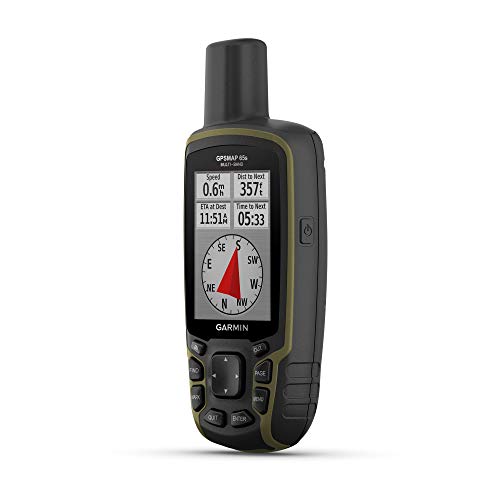
The Garmin GPSMAP 65s Handheld GPS Navigator stands out as an essential tool for outdoor enthusiasts who demand precision in their adventures. With its 2.6” sunlight-readable color display and multi-band technology, you’ll enjoy superior accuracy even in challenging environments. It features routable TopoActive mapping and a federal public land map, enhancing your navigation capabilities with an integrated 3-axis compass and barometric altimeter. Plus, wireless connectivity via BLUETOOTH® and ANT+® lets you sync with the Garmin Explore app for efficient route management. Weighing only 7.7 ounces, it’s lightweight and perfect for hiking, camping, or any exploration you have in mind.
Best For: Outdoor enthusiasts seeking a reliable and accurate handheld GPS device for hiking, camping, and exploration.
Pros:
- Compact and lightweight design at just 7.7 ounces, making it easy to carry on outdoor adventures.
- Enhanced navigation features with integrated 3-axis compass and barometric altimeter for better orientation.
- Wireless connectivity with BLUETOOTH® and ANT+® allows for seamless syncing with the Garmin Explore app.
Cons:
- Requires 2 AA batteries, which may need frequent replacement during extended trips.
- The 2.6” display may be considered small by some users, especially for detailed mapping.
- Limited compatibility with non-Garmin applications, restricting users who prefer alternative navigation solutions.
Garmin 010-02256-00 eTrex 22x, Rugged Handheld GPS Navigator, Black/Navy

With its rugged design and impressive battery life, the Garmin 010-02256-00 eTrex 22x stands out as the ideal GPS navigator for outdoor enthusiasts who need reliable navigation in the field. The 2.2” sunlight-readable color display guarantees you can easily read maps, even in bright conditions. Preloaded with Topo Active maps, it features routable roads and trails for cycling and hiking. Plus, with support for both GPS and GLONASS, you’ll enjoy enhanced tracking in tough environments. Its 8 GB internal memory and micro SD card slot allow for easy map downloads, while the 25-hour battery life keeps you connected longer.
Best For: Outdoor enthusiasts who require reliable navigation and durable performance in challenging environments.
Pros:
- Rugged design ensures durability for outdoor activities.
- Sunlight-readable display provides excellent visibility in bright conditions.
- Long battery life of up to 25 hours allows for extended use without frequent recharging.
Cons:
- Requires 2 AA batteries, which may need frequent replacement.
- Limited internal memory of 8 GB may restrict map storage options.
- The small 2.2” screen size may not be ideal for detailed map viewing.
Garmin inReach® Messenger Handheld Satellite Communicator

Hunters venturing into remote areas will find the Garmin inReach® Messenger Handheld Satellite Communicator an essential tool for safety and connectivity. This rugged, lightweight device lets you send and receive global two-way texts, even where cell coverage fails. With the Garmin Messenger app, you can message friends directly and engage in group chats. Its emergency features include GPS location sharing and a 24/7 interactive SOS service to the Garmin IERCC. Plus, its long-lasting battery provides up to 28 days of use in tracking mode, ensuring you’re never out of touch during your hunting adventures.
Best For: Hunters and outdoor adventurers seeking reliable communication and safety features in remote areas without cell coverage.
Pros:
- Provides global two-way messaging, ensuring connectivity even in the most isolated locations.
- Emergency SOS functionality with 24/7 monitoring for peace of mind during outdoor activities.
- Long battery life of up to 28 days in tracking mode, allowing extended use without frequent recharging.
Cons:
- Requires an active satellite subscription for full functionality, which can add to overall costs.
- May be subject to regulations in certain jurisdictions regarding the use of satellite communication devices.
- Limited messaging capabilities compared to traditional smartphone texting, including potential message limits.
Garmin eTrex 32x, Rugged Handheld GPS Navigator

For those seeking a reliable companion in the wild, the Garmin eTrex 32x stands out as a rugged handheld GPS guide designed specifically for outdoor enthusiasts. Weighing just 5 ounces and measuring 4 x 2.1 x 1.3 inches, it’s easy to carry. Its 2.2” sunlight-readable color display guarantees visibility in any condition. With preloaded Topo Active maps and 8 GB of internal memory, charting trails becomes a breeze. Plus, the 3-axis compass and barometric altimeter enhance your experience. Equipped with GPS and GLONASS, you’ll stay connected even in challenging environments, making it a must-have for any hunting adventure.
Best For: Outdoor enthusiasts who need a reliable and rugged GPS navigator for hiking and cycling adventures.
Pros:
- Lightweight and Portable: Weighs only 5 ounces, making it easy to carry on any outdoor excursion.
- Sunlight-Readable Display: The 2.2” color display ensures visibility in various lighting conditions.
- Advanced Navigation Features: Includes a 3-axis compass and barometric altimeter for enhanced navigation accuracy.
Cons:
- Limited Internal Memory: Only 8 GB of internal memory, which may require additional micro SD cards for extensive map downloads.
- Battery Dependency: Operates on 2 AA batteries, which need to be replaced regularly for extended trips.
- Basic Touchscreen Interface: The touchscreen may not be as responsive or advanced as those found in higher-end GPS models.
Garmin 010-00970-00 eTrex 10 Worldwide Handheld GPS Navigator

The Garmin 010-00970-00 eTrex 10 Worldwide Handheld GPS Navigator stands out as an ideal companion for outdoor enthusiasts who value reliability and functionality. This rugged device features a preloaded worldwide basemap and a high-sensitivity GPS receiver that guarantees quick positioning, thanks to WAAS and GLONASS support. Its waterproof design protects against splashes and rain, while the 2.2-inch monochrome display simplifies navigation. With a battery life of up to 20 hours and support for paperless geocaching, you can confidently explore the wild. Plus, its compatibility with Garmin Connect allows you to share your adventures with fellow hunters.
Best For: Outdoor enthusiasts looking for a reliable and rugged handheld GPS navigator for their adventures.
Pros:
- High-sensitivity GPS receiver with WAAS and GLONASS support ensures fast and accurate positioning.
- Waterproof design (IPX7) protects the device from splashes and rain.
- Long battery life of up to 20 hours on just two AA batteries, making it suitable for extended trips.
Cons:
- Monochrome display may be less visually appealing compared to color screens.
- Limited features compared to more advanced GPS models, which may not satisfy all users.
- Requires two AA batteries, which may need frequent replacements during heavy use.
Spot X Bluetooth 2-Way Satellite Messenger

When you’re deep in the wilderness, having reliable communication can be a game changer for your safety and peace of mind. The Spot X Bluetooth 2-Way Satellite Messenger lets you stay connected through the Globalstar satellite network, ensuring you can send messages to any cell number or email globally. It syncs with your phone, allowing easy family communication and emergency notifications. In a crisis, you can send an S.O.S. to 24/7 Search & Rescue services, providing your exact GPS coordinates. With included accessories like a strap and carabiner, the Spot X enhances your outdoor adventures with confidence.
Best For: Outdoor enthusiasts, hikers, and campers who require reliable communication and safety while exploring remote areas.
Pros:
- 2-way communication: Syncs with your phone for easy messaging and emergency alerts.
- Emergency assistance: Direct access to 24/7 Search & Rescue services with GPS coordinates.
- Portable design: Comes with accessories like a strap and carabiner for convenient carrying.
Cons:
- Subscription required: Ongoing service plans needed for full functionality.
- Dependent on satellite coverage: Performance may vary based on location and satellite signal.
- Initial setup required: Users must activate the device before use, which may be cumbersome for some.
Garmin GPSMAP 66i Handheld GPS and Satellite Communicator

Hunters seeking reliable navigation and communication in remote areas will find the Garmin GPSMAP 66i Handheld GPS and Satellite Communicator to be an invaluable tool. Its large, 3-inch sunlight-readable display makes navigation easy, while preloaded Garmin TOPO mapping and Birdseye satellite imagery keep you informed. With 100% global Iridium satellite network access, you can send two-way messages and trigger an SOS to a 24/7 rescue center. Enjoy impressive battery life—up to 200 hours in Expedition mode. Plus, it offers cellular connectivity for weather updates and compatibility with the Garmin Explore app to manage your trips effectively. Stay safe and connected!
Best For: Hunters and outdoor enthusiasts seeking reliable navigation and communication tools in remote areas.
Pros:
- Large, sunlight-readable 3-inch color display for easy navigation.
- Access to 100% global Iridium satellite network for two-way messaging and SOS functionality.
- Long battery life with up to 200 hours in Expedition mode, ideal for extended trips.
Cons:
- Requires a satellite subscription for two-way messaging.
- Some jurisdictions may have regulations prohibiting the use of satellite communication devices.
- The initial setup and learning curve may be challenging for some users.
Factors to Consider When Choosing a GPS Communicator for Hunters
When choosing a GPS communicator for your hunting trips, you’ll want to focus on several key factors. Consider navigation accuracy and reliability, satellite communication capabilities, and battery life, as these elements can make or break your experience in the field. Additionally, look for features like mapping, waypoints, and emergency SOS functionality to guarantee you’re fully equipped for any situation.
Navigation Accuracy and Reliability
Choosing the right GPS communicator hinges on wayfinding accuracy and reliability, especially in the unpredictable wilderness. For hunters, tracking your location and traversing rugged terrains is essential. Look for devices with multi-band technology and expanded global navigation satellite systems (GNSS) support to enhance accuracy. Advanced features like barometric altimeters and 3-axis compasses provide reliable data, important in dense forests or mountains. Access to preloaded topographic maps can improve your situational awareness and assist in route planning, helping you stay on track. Don’t forget about battery life; a long-lasting device guarantees you maintain orientation and communication throughout your trip. Finally, real-time location sharing features enhance safety, allowing you to share your position with others in remote areas.
Satellite Communication Capabilities
A reliable GPS communicator isn’t just about navigation; it’s also your lifeline in remote areas where cellular coverage disappears. Satellite communicators let you send and receive messages globally, ensuring you stay connected even in the wild. Many of these devices use the Iridium satellite network, known for its extensive coverage, which is essential for isolated locations. Look for models that offer emergency SOS features; they can alert a monitoring center with your GPS location, giving you peace of mind. Additionally, two-way messaging capabilities allow you to communicate with friends and family, enhancing your safety and enjoyment. When choosing a device, consider how it fits your communication needs during long hunting trips, as reliable contact can make all the difference.
Battery Life and Durability
Staying connected in remote areas is only part of the equation; battery life and durability are key factors that can make or break your experience with a GPS communicator. For hunters, reliable battery performance is vital. Look for models offering up to 35 hours in tracking mode or over 200 hours in expedition mode—perfect for those extended trips. Durability also matters; choose devices that are water-resistant or ruggedized to handle rough outdoor conditions. Consider the battery type—some use standard AA batteries while others feature built-in rechargeable batteries. Power-saving modes can help extend battery life by reducing tracking frequency. Ultimately, if you’re venturing into remote areas, opt for a device with longer battery life to guarantee you stay connected when it counts.
Mapping and Waypoint Features
When you’re out in the wild, having access to detailed mapping and waypoint features can greatly enhance your hunting experience. Look for GPS communicators preloaded with TopoActive maps, providing routable roads and trails to help you navigate your hunting areas effectively. Devices that support multiple satellite systems like GPS and GLONASS are vital for improved tracking accuracy, especially in challenging terrains. Opt for models that allow you to create and manage waypoints, so you can easily mark locations of interest or game sightings. A user-friendly interface is important for quick access to mapping tools. Finally, guarantee compatibility with mobile apps for enhanced trip planning and sharing of tracks and routes with fellow hunters.
Emergency SOS Functionality
Choosing the right GPS communicator involves more than just mapping features; emergency SOS functionality is essential for your safety. With this feature, you can send alerts that include your GPS location to a 24/7 monitoring center, ensuring quick responses in vital situations. Many devices allow you to trigger an interactive SOS, which helps emergency services coordinate assistance more effectively. Some models even offer unlimited SOS alerts, so you can call for help without worrying about limits. Keep in mind that SOS features typically require an active satellite subscription, necessary for communication in remote areas without cellular coverage. Additionally, certain models provide access to medical assistance for non-emergencies, further enhancing your safety while you’re out in the wild.
Size and Weight Considerations
Size and weight are essential factors in selecting a GPS communicator for hunting. You’ll want a lightweight option, ideally under 8 ounces, to enhance portability during long treks. Compact devices measuring around 4 to 6 inches in length fit easily into pockets or small packs, minimizing bulk. Battery efficiency is also vital; aim for a device with at least 20 hours of battery life in GPS mode to avoid constant recharging. Additionally, look for a rugged design with an IPX7 rating or higher for water resistance, ensuring durability in harsh conditions. A lightweight and compact communicator will improve your mobility, allowing you to navigate challenging terrains without being weighed down by bulky equipment.
Connectivity and Compatibility Options
As you explore GPS communicators for your hunting adventures, connectivity and compatibility options play an essential role in ensuring you stay informed and safe. Look for devices that utilize multi-band technology and support multiple global navigation satellite systems (GNSS) for enhanced accuracy in diverse terrains. Bluetooth and ANT+ connectivity options allow seamless integration with your smartphone, making navigation and communication easier. Check if the device is compatible with dedicated apps or websites for efficient trip planning and waypoint management. Prioritize two-way messaging capabilities over satellite networks to stay connected in remote areas, ensuring a suitable subscription plan is available. Finally, choose a communicator that allows you to share GPS coordinates and track locations, boosting safety and coordination during your hunting trips.