Sharp insect macro images depend on more than magnification. A stable, finely adjustable focusing rail can help you make precise focus shifts without disturbing a delicate setup.
We compare 10 macro rails for travel, tripod work, focus stacking, and close-up field photography, with attention to movement control, mounting compatibility, and practical ease of use.
Best 10 Camera Macro Rails for Insect Photography Picks for 2026
Precision Pick
NiSi NM-180S Macro Focusing Rail

- 1.25mm-per-rotation adjustment with a 160mm range
- 360-degree rotating clamp for flexible framing
- Arca-Swiss compatible with multiple mounting options
Best For: Precise insect close-ups and flexible tripod-based positioning
Portable Value
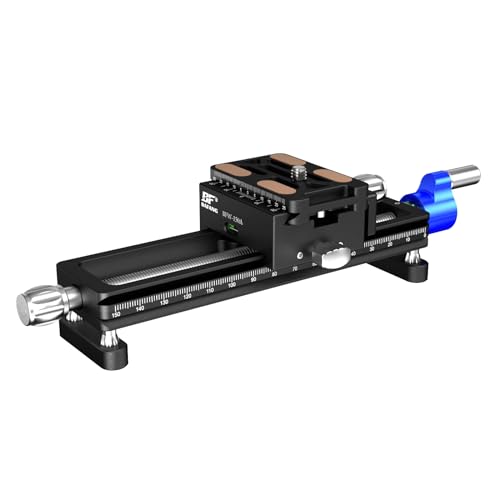
- Compact design weighs 11.84 ounces
- Smooth sliding for precise close-up adjustments
- Supports up to 5 pounds of camera equipment
Best For: Portable DSLR close-up photography and video
Four-Way Control
NEEWER 4-Way Macro Focusing Rail

- Moves left, right, forward, and backward
- Numeric scales support repeatable adjustments
- Supports cameras up to 2.5kg
Best For: Flexible macro compositions and time-lapse positioning
Heavy-Duty Choice
SUNWAYFOTO MFR-150D Wormdrive Rail

- 7kg maximum load for heavier macro setups
- 1.25mm travel per revolution with adjustable damping
- Bidirectional Arca/RRS-compatible clamp
Best For: Large macro rigs and controlled wormdrive focusing
Stable Precision

- 14 mm-per-turn threaded adjustment
- Rotating top module and dual macro head
- 8 kg maximum weight recommendation
Best For: Stable, versatile desktop or tripod-supported macro setups
Fine-Stacking Control

- Two rails with 0.04 mm and 0.01 mm accuracy
- Arca-Swiss-compatible quick-release clamp
- Five 1/4-inch mounting holes
Best For: Precise focus stacking with lighter camera setups
Bidirectional Adjustment

- 155 mm adjustment range
- Two-way crank-controlled worm gear
- Arca-Swiss, 1/4-inch, and 3/8-inch mounting
Best For: Flexible desktop or outdoor nature photography
Best Precision Wormdrive Rail

- 115mm fine-adjustment travel
- 1mm engraved reference scales
- Arca-compatible and tripod-ready
Best For: Repeatable focus stacking and detailed insect macro work
Best Simple Stable Rail

- Precise, controlled camera movement
- Quick-release setup
- Stable and durable construction
Best For: Straightforward macro positioning and close-up composition
Best Versatile Four-Way Rail

- 360-degree rotating head
- Stackable for four-way adjustment
- Detachable feet for tabletop or tripod use
Best For: Flexible angles and modular insect macro setups
Precision Pick – NiSi NM-180S Macro Focusing Rail
For photographers comparing camera macro rails for insect photography, the NiSi NM-180S stands out for its fine 1.25mm-per-rotation adjustments and 160mm adjustment range. Its rotating clamp and Arca-Swiss compatibility make it practical for carefully positioning a camera during close-up work.
Best For: Insect photographers who need controlled, fine-focus adjustments and flexible camera orientation.
Pros:
- Provides 1.25mm movements per rotation across a 160mm range.
- 360-degree rotating clamp helps reposition the camera without removing the rail.
- Arca-Swiss clamp, quick-release plate, and 1/4-inch and 3/8-inch mounting options improve compatibility.
- CNC-machined aluminum construction is designed for repeated field use.
Cons:
- The supplied notes do not specify the rail’s maximum supported load.
- Its extensive adjustment and mounting features may be more than needed for casual close-ups.
The NM-180S is a versatile choice when precise positioning matters more than simplicity. Its 12-month limited warranty adds useful coverage when purchased through an authorized NiSi USA dealer.
Portable Value – MEIKON BFW-150A Macro Rail
The MEIKON BFW-150A is a compact option for shoppers seeking camera macro rails for insect photography without a bulky setup. It is designed for smooth sliding and precise adjustment, supports most DSLR cameras and lenses, and weighs 11.84 ounces for easier transport.
Best For: Beginners and field photographers who prioritize portability for close-up photography or video.
Pros:
- Compact and portable for close-up photography and video recording.
- Offers precise adjustment and smooth sliding for detailed subjects.
- Compatible with most DSLR cameras and lenses.
- Supports equipment up to 5 pounds.
Cons:
- The supplied dimensions are incomplete, listed only as “X inches.”
- Its six-month warranty is shorter than some alternatives in this roundup.
- The notes do not specify the adjustment range or mounting interface.
The BFW-150A makes sense when you want a straightforward, lightweight rail for close-up work. Before buying, verify its dimensions and mounting details against your camera and tripod setup.
Four-Way Control – NEEWER 4-Way Macro Focusing Rail
For camera macro rails for insect photography, the NEEWER 4-Way Macro Focusing Rail offers movement both across and toward the subject. Its numeric scales, large adjustment knobs, and 2.5kg capacity provide useful control for macro photography, close-ups, and time-lapse work.
Best For: Macro photographers who need left-right and forward-backward positioning from one rail.
Pros:
- Four-way movement supports left, right, forward, and backward adjustments.
- Numeric scales and large knobs aid repeatable positioning.
- Supports cameras up to 2.5kg while weighing 1.3 pounds.
- Quick-release plate and two tripod-connection methods simplify setup.
Cons:
- The adjustment knobs require opposite-axis locking for stable operation.
- At 1.3 pounds, it is heavier than the compact MEIKON option.
- It is not water resistant according to the supplied specifications.
The NEEWER is a strong choice when a single-axis rail feels limiting. Its four-way design is especially useful for methodical insect compositions, provided you follow the recommended locking procedure during adjustments.
Heavy-Duty Choice – SUNWAYFOTO MFR-150D Wormdrive Rail
The SUNWAYFOTO MFR-150D is a precision-focused option among camera macro rails for insect photography, combining wormdrive adjustment with a bidirectional Arca/RRS-compatible clamp. Its 1.25mm stage travel per revolution, adjustable damping, and 7kg load rating suit demanding camera setups.
Best For: Photographers using heavier macro rigs who want controlled wormdrive positioning and broad Arca compatibility.
Pros:
- Dual cranks allow adjustment from either end of the rail.
- Provides 1.25mm travel per revolution with adjustable tension and damping.
- Supports up to 7kg and is machined from aircraft-grade aluminum.
- Bidirectional Arca/RRS-compatible clamp and double Arca dovetails add mounting flexibility.
Cons:
- Its 150mm rail has a 95mm carriage travel, less than the NiSi’s stated 160mm adjustment range.
- The feature-rich design may be excessive for lightweight beginner setups.
- The supplied specifications do not mention a quick-release plate.
The MFR-150D is the most load-capable choice here and offers useful control for substantial macro equipment. Its six-year warranty is also notably long, making it appealing for photographers planning frequent use.
Stable Precision – Fotopro FT-100PRO Macro Rail
The Fotopro FT-100PRO is a sturdy option among camera macro rails for insect photography, combining fine screw adjustment with a stable, desktop-friendly design. Its rotating top module, leveling aid, and dual macro head support controlled composition when working at close range.
Best For: Photographers who want a stable, versatile rail for desktop or tripod-supported macro work.
Pros:
- CNC-machined construction with corrosion-resistant stainless-steel screws and durable copper sliding parts.
- Multi-headed threaded screw moves 14 mm per turn for faster, smoother focusing adjustments.
- 360-degree rotating top module, locking knob, level, and horizontal/vertical adjustment support precise composition.
- Supports up to 8 kg and includes two bottom 1/4-inch interfaces for accessories or alternate mounting.
Cons:
- Not water resistant, so outdoor insect photography requires weather-conscious handling.
- Its 7.4-inch folded size and feature-rich design may be more than needed for simple setups.
The FT-100PRO stands out when stability, mounting flexibility, and quick but controlled positioning matter. The included anti-slip features and universal dovetail slot further support secure camera placement.
Fine-Stacking Control – SWEBO S102082 Macro Rail
Swebo S102082 2-Accuracy Macro Focusing Slide Rail,Focus Stacking,Insect Macro Photography
Check Price On AmazonThe SWEBO S102082 is designed for photographers comparing camera macro rails for insect photography and focus stacking. It includes two accuracy slide rails, offering 0.04 mm and 0.01 mm precision, along with a crank-equipped adjustment system for incremental positioning.
Best For: Focus-stacking users who prioritize very fine movement and Arca-Swiss compatibility.
Pros:
- Includes two slide rails with stated 0.04 mm and 0.01 mm accuracy.
- Arca-Swiss-compatible quick-release clamp connects with compatible tripod heads.
- Three-bearing design includes two miniature thrust bearings for supported movement.
- Five 1/4-inch screw holes and a large knurled knob with crank provide mounting and adjustment flexibility.
Cons:
- Its maximum recommended weight is 577 g, limiting heavier camera and lens combinations.
- At 623 g, it is relatively substantial for a compact focusing rail.
With its dual precision ranges and crank control, the S102082 is particularly compelling for deliberate focus-stacking workflows. Check your camera-and-lens weight before choosing it for a fully equipped insect setup.
Bidirectional Adjustment – Leftfoto Geared Macro Rail
The Leftfoto Geared Macro Focusing Rail offers bidirectional control for photographers choosing camera macro rails for insect photography. Its worm gear, indexing scale, two crank handles, and 155 mm adjustment range make it practical for repeatable fine-tuning in desktop or outdoor nature sessions.
Best For: Photographers seeking a long adjustment range with Arca-Swiss mounting and controlled two-way movement.
Pros:
- 155 mm adjustment range with a stated 1 mm displacement per full screw rotation.
- Two crank handles enable smooth, incremental bidirectional positioning.
- Arca-Swiss dovetail mount plus 1/4-inch and 3/8-inch screw holes support varied tripod setups.
- CNC-machined construction is designed for wobble-free operation and stable vertical shooting.
Cons:
- The stated adjustment increments are less fine than the dedicated 0.01 mm option of the SWEBO rail.
- At 1.1 pounds, it may add noticeable weight to a portable outdoor macro kit.
- It is not water resistant.
The Leftfoto is a strong all-purpose choice when bidirectional travel and mounting compatibility are more important than ultra-fine stated precision. Its included wrench and convertible screw also make initial setup straightforward.
Best Precision Wormdrive Rail – Haoge FM-160
For photographers comparing camera macro rails for insect photography, the Haoge FM-160 stands out for controlled, incremental positioning. Its wormdrive adjustment provides up to 115mm of front-to-back travel, while the engraved 1mm scales help repeat setups for close-up shooting and focus stacking.
Best For: Insect photographers who need fine, repeatable focus adjustments in a relatively portable rail.
Pros:
- Wormdrive offers precise 4mm movement per full screw rotation.
- 115mm of front-to-back travel supports detailed macro positioning.
- Includes an Arca-type quick-release clamp and dovetail groove.
- Built-in 1/4″-20 threads allow tripod mounting.
Cons:
- It is not water resistant, so outdoor users need to protect it from moisture.
- The maximum weight recommendation is listed as 14.1 ounces.
The FM-160 is a focused choice for careful, tripod-based macro work. Its scales, damping controls, and fine screw adjustment are especially useful when building consistent focus-stacking sequences.
Best Simple Stable Rail – ProMaster MR1
The ProMaster MR1 is a straightforward option among camera macro rails for insect photography, emphasizing stable, smooth camera movement. Its quick-release system simplifies setup, while fine adjustments help position the camera for sharp close-up compositions.
Best For: Macro photographers who want a stable, easy-to-set-up focusing rail for regular close-up work.
Pros:
- Provides precise and controlled camera movement for composition and focus.
- Quick-release design helps speed up setup and adjustments.
- Designed for compatibility with a range of camera models and lens setups.
- Durable construction provides a stable platform for repeated use.
Cons:
- The supplied notes do not specify travel distance or measurement scales.
- It is not water resistant for unprotected outdoor use.
The MR1 is a practical, general-purpose rail when dependable positioning matters more than detailed specifications. Its smooth movement and quick release make it convenient for controlled tabletop or tripod macro sessions.
Best Versatile Four-Way Rail – SIRUI MS18
The SIRUI MS18 offers flexible positioning for photographers evaluating camera macro rails for insect photography. A quick-adjustment button, 360-degree rotating head, and Arca-style mounting system make it useful when changing angles or refining a close-up composition.
Best For: Insect and macro photographers who want angle adjustment, quick repositioning, and the option to build a four-way rail setup.
Pros:
- Quick-adjustment button supports rapid positioning changes.
- 360-degree rotating head helps set varied shooting angles.
- Two rails can be stacked for four-way camera adjustment.
- Detachable feet allow tabletop use or direct tripod mounting.
Cons:
- Its 440g weight may be more noticeable in a field kit.
- It is not water resistant.
- Advanced features may be unnecessary for photographers who only need basic front-to-back adjustment.
The MS18 is the most adaptable option of the three, particularly for setups requiring more than a single-axis slide. Its rotating head, removable feet, and modular Arca-style design give it strong flexibility for controlled macro scenes.
How We Picked the Best Camera Macro Rails for Insect Photography
We evaluated these rails by the features that matter most for insect macro work: adjustment precision, travel length, stability, mounting flexibility, and compatibility with common tripod systems. Geared or worm-drive mechanisms generally offer finer control than simple friction sliders, while bidirectional designs can make composition and focus adjustments faster.
We also considered whether each rail supports quick-release plates, Arca-style clamps, or universal tripod mounting. These details affect how easily you can move between a tripod, focusing rail, and camera body in the field. Because insect photography often involves low subjects and narrow working distances, practical handling and repeatable movement are as important as maximum rail travel.
Quick Comparison
| Rail type | Best suited to | What to look for |
|---|---|---|
| Worm-drive or geared | Focus stacking and precise compositions | Low backlash, smooth knobs, firm locking |
| Four-way rail | Adjusting camera position on multiple axes | Independent movement and stable locking |
| Single-axis slider | Simple front-to-back focus changes | Useful travel length and rigid construction |
| Arca-compatible rail | Tripod-based field setups | Secure clamp and plate compatibility |
Key Buying Factors for Camera Macro Rails for Insect Photography
Precision and Backlash
Choose a geared or worm-drive rail when you need tiny, repeatable focus increments. Excess play in the mechanism can make stacking difficult, especially at high magnification. A locking control is useful when the camera must remain fixed between exposures.
Travel and Movement Direction
Longer travel gives you more room to position the camera, but it can add weight and bulk. A front-to-back rail is usually enough for focus stacking. Four-way or bidirectional designs are better when you frequently recompose around a moving subject.
Stability and Mounting
Look for a rigid base, secure tripod connection, and a plate or clamp that matches your existing Arca-Swiss or quick-release system. Check the combined weight of your camera, lens, flash, and accessories rather than judging capacity by the camera body alone.
Field Practicality
For outdoor insect photography, smooth operation, manageable size, and fast setup can matter more than the longest specifications. A rail that is easy to level and adjust is more useful than one that stays in a bag because it is too heavy.
Who Should Buy Which Camera Macro Rails for Insect Photography?
Focus-stackers: Prioritize worm-drive or geared rails with fine adjustment and minimal backlash. Tripod-based photographers: Look for Arca-compatible clamps and a rigid platform that integrates with your head and plates. Field photographers: Favor compact rails with quick-release mounting and enough travel for your lens and working distance. Beginners: A straightforward single-axis slider can provide dependable front-to-back control without the complexity of a four-way system.
Before buying, verify the rail’s mounting standard, travel direction, load capacity, and overall dimensions. The best choice is the one that matches your lens, support system, and shooting technique—not necessarily the rail with the most adjustment features.