The right lens adapter can help you use an existing lens collection on a newer camera body without giving up control over exposure. However, compatibility varies widely: some adapters are fully mechanical, while others support electronic aperture control or autofocus.
This roundup compares 10 camera lens adapters with aperture control across Sony E, Fujifilm X, Micro Four Thirds, Canon EF, Nikon F, and other mounts. Use the guide below to narrow your choice by lens mount, camera system, shooting style, and the controls you actually need.
Best 10 Camera Lens Adapters with Aperture Control Picks for 2026
Best Mechanical Control

- Mechanical aperture control dial
- Anodized aluminum construction
- Infinity focus supported
Best For: Sony E-mount users adapting Pentax K AF lenses
Best Nikon G Compatibility
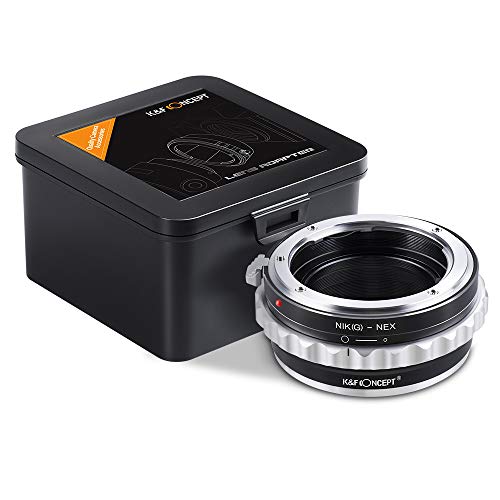
- Fits Nikon G, F, AI, and AIS lenses
- Aperture control ring for G lenses
- Supports manual stop-down metering
Best For: Sony E/NEX users adapting Nikon lenses
Best Autofocus Features

- Electronic aperture synchronization
- Autofocus and stabilization support
- USB firmware upgrade port
Best For: Fujifilm X users adapting Canon EF lenses
Best for Reverse Macro

- Mechanical aperture control adapter
- Reverse mounting for extreme macro
- Includes UV filter and cap
Best For: Nikon F users exploring inexpensive macro photography
Best Autofocus Option

- Autofocus support for Canon EF/EF-S lenses
- Manual ring plus body-based aperture control
- EXIF, IS, and USB-C firmware support
Best For: Fujifilm users adapting Canon EF/EF-S lenses
Best Simple Manual Adapter

- Built-in manual aperture dial
- All-metal construction and infinity focus
- Compatible with Sony A and Minolta AF lenses
Best For: Manual shooting on Micro Four Thirds cameras
Best for Leica M Lenses

- Manual aperture and focus control
- Leica M to Sony E-mount compatibility
- Matte interior and knurled CNC design
Best For: Sony E-mount users shooting manually with Leica M lenses
Best Manual Control
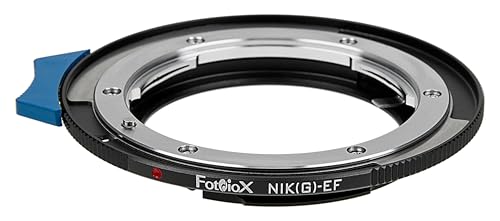
- Built-in aperture dial for G-type lenses
- All-metal fit with infinity focus
- Works with Canon EF and EF-S cameras
Best For: Manual Nikon lens use on Canon DSLR bodies
Best Electronic Features

- Body-controlled aperture adjustment
- Phase-detection autofocus on supported cameras
- EXIF and stabilization support
Best For: Sony E shooters adapting Nikon F lenses
Best for Fujifilm G
Pentax 645 to Fujifilm G Adapter
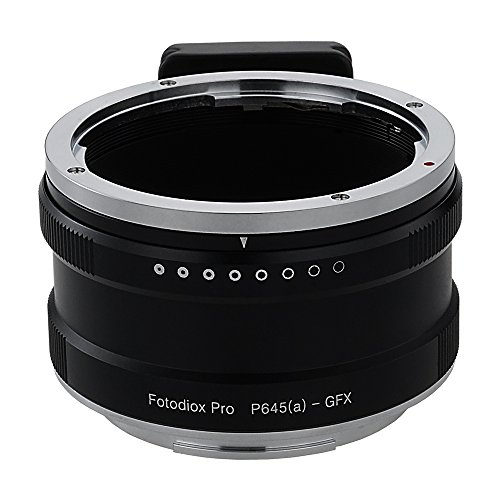
- Manual aperture dial for adapted lenses
- Chrome-plated brass, all-metal mount
- Secure fit with infinity focus
Best For: Manual Pentax 645 lens use on Fujifilm G cameras
Best Mechanical Control – Pentax K AF to Sony E Adapter
This Fotodiox adapter is a practical option for using Pentax K AF lenses on Sony E-mount cameras. Its built-in mechanical aperture dial provides aperture control without electronic communication, while the anodized aluminum construction is designed for durability.
Best For: Sony E-mount users adapting Pentax K AF lenses who want simple mechanical aperture control.
Pros:
- Compatible with Pentax K AF lenses and Sony E-mount cameras
- Built-in mechanical aperture control dial
- Anodized aluminum construction
- Allows infinity focus or beyond
Cons:
- Mechanical rather than electronic aperture control
- Compatibility is specifically centered on K AF lenses and E-mount cameras
With its straightforward manual design and two-year limited manufacturer warranty, this adapter suits photographers prioritizing basic mount compatibility and physical aperture adjustment.
Best Nikon G Compatibility – Nikon F to Sony E Adapter
The K&F Concept adapter is designed for mounting Nikon G, F, AI, and AIS lenses on Sony E-mount cameras. Its aperture control ring supports Nikon G lenses, making it a useful choice among camera lens adapters with aperture control for manual stop-down shooting.
Best For: Sony E/NEX users adapting Nikon G or F-mount lenses with manual aperture adjustment.
Pros:
- Fits Nikon G, F, AI, and AIS mount lenses
- Includes an aperture control ring for Nikon G lenses
- Supports AE priority and manual stop-down metering
- Infinity focus is allowed
Cons:
- The aperture ring cannot be used with Nikon AI lenses because of the lens-pin design
- Notes exclude several Sony models, including a7S, a7 II, a7S II, and a7R II
- Infinity positioning may require careful viewfinder checking
This adapter offers broad Nikon mount compatibility, but buyers should verify their exact Sony camera and lens combination before ordering, especially when using AI lenses.
Best Autofocus Features – Fringer EF-FX PRO III
The Fringer EF-FX PRO III is a feature-rich electronic adapter for Canon EF and compatible third-party EF lenses on Fujifilm X-series cameras. It provides electronic aperture control, autofocus modes, stabilization support, and lens data recording, making it a more advanced alternative to fully manual camera lens adapters with aperture control.
Best For: Fujifilm X-series photographers who want electronic aperture control and autofocus with EF lenses.
Pros:
- Supports Canon and various third-party EF lenses
- Electronic aperture synchronization and AF-S/AF-C/MF modes
- Records lens information and supports EXIF data
- USB port enables firmware upgrades
Cons:
- Autofocus performance varies by lighting conditions and lens model
- Lens and body stabilization cannot operate together
- Compatibility is intended for Fujifilm X-series cameras and EF lenses
Its electronic controls and firmware-upgrade capability make this a strong choice for users who need more than basic manual aperture adjustment, provided their specific lens and camera pairing is supported.
Best for Reverse Macro – 77mm Nikon F Reverse Ring Kit
This Fotodiox kit takes a specialized approach to camera lens adapters with aperture control by reverse-mounting a lens with a 77mm filter thread onto Nikon F cameras. The included mechanical aperture control adapter adds manual aperture adjustment and a 52mm filter thread for the supplied UV filter and cap.
Best For: Nikon F-mount photographers experimenting with inexpensive extreme macro photography.
Pros:
- Designed for lenses with 77mm filter threads
- Mechanical aperture control adapter included
- Reverse mounting enables extreme macro work
- Includes a 52mm UV filter and cap
Cons:
- Manual focus only
- No image stabilization
- Specialized for reverse macro rather than general lens adaptation
This kit is best viewed as a dedicated macro accessory, not an everyday mount converter. Its included aperture adapter and filters make it a convenient starting point for close-up experimentation with compatible lenses.
Best Autofocus Option – VILTROX EF-FX1 Pro
The VILTROX EF-FX1 Pro is a strong choice for photographers seeking camera lens adapters with aperture control for Canon EF/EF-S lenses on Fujifilm X-mount cameras. It combines autofocus, electronic communication, a manual aperture ring, and USB-C firmware updates.
Best For: Fujifilm X-mount users who want to keep using Canon EF/EF-S lenses with autofocus and aperture adjustment.
Pros:
- Supports aperture adjustment through the camera body and adapter ring.
- Provides autofocus, EXIF transmission, and a built-in IS function.
- Lightweight 126 g all-metal construction with USB-C firmware support.
Cons:
- Compatibility is limited to Fujifilm X-mount camera bodies and Canon EF/EF-S lenses.
- Electronic features may depend on compatible camera and lens combinations.
Choose this adapter if maintaining electronic lens functionality is more important than using a fully manual setup. Its broad stated camera compatibility and firmware-upgrade support add flexibility for Fujifilm users.
Best Simple Manual Adapter – Fotodiox Sony A to MFT
The Fotodiox SnyA-MFT is a straightforward option among camera lens adapters with aperture control, connecting Sony A-mount and Minolta AF lenses to Micro Four Thirds cameras. Its built-in aperture dial provides manual exposure control in an all-metal design.
Best For: Micro Four Thirds photographers adapting Sony A-mount or Minolta AF lenses for manual shooting.
Pros:
- Built-in aperture control dial for compatible lenses.
- All-metal construction with a smooth mounting surface.
- Designed to maintain infinity focus and backed by a 24-month warranty.
Cons:
- Exposure control is manual rather than electronic.
- No image stabilization is listed.
- Does not provide the electronic autofocus and EXIF features of a powered adapter.
This adapter suits users who want a simple, durable connection and direct aperture control. It is best approached as a manual solution rather than a way to preserve modern lens electronics.
Best for Leica M Lenses – K&F Concept IV PRO L/M-E
The K&F Concept IV PRO L/M-E is a manual option for photographers comparing camera lens adapters with aperture control for Leica M lenses on Sony E-mount bodies. It uses an aperture control ring and requires manual focusing without electronic contacts.
Best For: Sony E-mount users who prefer a fully manual Leica M lens setup with tactile, mechanical controls.
Pros:
- Provides manual aperture and focus control without electronic contacts.
- CNC-machined copper and aluminum alloy construction is designed for durability.
- Matting varnish inside helps reduce internal light reflection.
- Knurled, nonslip design makes mounting and removal easier.
Cons:
- Autofocus and electronic lens communication are not supported.
- Users must enable the camera’s “Release w/o Lens” setting.
- Compatibility should be verified before purchase for both lens and camera mounts.
This adapter is a good fit for deliberate, hands-on shooting with Leica M glass. Its mechanical design emphasizes control and build quality, but it is not intended for users who need autofocus or electronic aperture operation.
Best Manual Control – Nikon F G to Canon EF Adapter
If you need camera lens adapters with aperture control for Nikon F-mount G-type lenses, this Fotodiox adapter provides a straightforward way to use them on Canon EF and EF-S cameras. Its built-in dial offers manual aperture adjustment while the all-metal construction supports a secure connection and infinity focus.
Best For: Canon DSLR users adapting Nikon F-mount G-type lenses for manual-focus photography.
Pros:
- Built-in aperture control dial for G-type lenses
- Compatible with Canon EF and EF-S mount cameras
- All-metal construction with a secure, solid fit
- Supports infinity focus and includes a limited two-year warranty
Cons:
- Manual focus and manual exposure control are required
- Designed specifically for Nikon F to Canon EF/EF-S compatibility
This is a practical choice for photographers who value a durable mount and direct aperture control over electronic automation.
Best Electronic Features – Nikon F to Sony E Adapter
For photographers seeking camera lens adapters with aperture control plus electronic communication, the VILTROX NF-E1 connects Nikon F lenses to Sony E-mount cameras. It supports body-controlled aperture adjustment, phase-detection autofocus on compatible cameras, lens stabilization, and EXIF transmission.
Best For: Sony E-mount users who want added electronic functionality when adapting Nikon F lenses.
Pros:
- Supports aperture adjustment from compatible Sony camera bodies
- Offers autofocus in phase-detection focus mode on supported cameras
- Transmits EXIF information and supports lens stabilization
- Aluminum-alloy design includes a 1/4-inch tripod-mounting screw
Cons:
- Autofocus is limited to compatible phase-detection cameras and modes
- Compatibility varies across specific Sony camera and Nikon lens combinations
The NF-E1 is the strongest option here for users prioritizing electronic features, but checking the supported camera and lens combination is important before purchase.
Best for Fujifilm G – Pentax 645 to Fujifilm G Adapter
This Fotodiox Pro adapter is designed for mounting Pentax 645 D FA and DA autofocus lenses on Fujifilm G-mount digital cameras. Its built-in aperture dial acts as a manual pre-stop, while the precision all-metal construction and chrome-plated brass mounts aim to provide a stable, wobble-free connection.
Best For: Fujifilm G-mount photographers adapting Pentax 645 lenses for manual exposure and focus.
Pros:
- Built-in manual aperture control dial
- Precision fit with no stated play, gap, or wobbling
- All-metal construction with chrome-plated brass mounts
- Supports infinity focus and includes a two-year warranty
Cons:
- Autofocus and electronic metering functions are disabled
- Exposure settings must be set manually
- Limited to Pentax 645 lens and Fujifilm G-mount camera compatibility
This adapter suits a deliberate, manual shooting workflow where a secure mount and aperture control matter more than electronic lens functions.
How We Picked the Best Camera Lens Adapters with Aperture Control
We focused on mount adapters that provide an aperture-control feature, whether through a built-in mechanical ring, an electronic interface, or a converter design intended for lenses with electronically controlled apertures. The selection covers common mirrorless and DSLR systems, including Sony E, Fujifilm X, Micro Four Thirds, Canon EF, Nikon F, Pentax K, Leica M, and Pentax 645.
We also considered the type of lens support offered. Some adapters are designed for manual-focus lenses and mainly provide a secure physical connection and aperture adjustment. Others are built for autofocus lenses and may communicate electronically with the camera. Because performance can vary by lens and firmware, buyers should verify the exact compatibility list before ordering.
Quick Comparison
| Adapter type | Best suited to | Typical control |
|---|---|---|
| Mechanical adapter with aperture ring | Manual or adapted DSLR lenses | Manual aperture control |
| Electronic autofocus adapter | Modern Canon, Nikon, or similar lenses | Aperture, autofocus, and sometimes EXIF data |
| Specialty macro or reverse ring | Close-up and experimental photography | Mechanical lens positioning |
| Medium-format adapter | Large-format or medium-format lenses | Manual or limited electronic control |
Key Buying Factors for Camera Lens Adapters with Aperture Control
Mount Compatibility
Match both sides of the adapter precisely: the lens mount and the camera-body mount. Similar names do not guarantee compatibility. For example, Nikon F, Nikon G, Canon EF, Canon EF-S, Sony A, Sony E, Fujifilm X, and Micro Four Thirds are different systems with different flange distances and control requirements.
Mechanical or Electronic Operation
A mechanical aperture ring can work well with lenses that have a physical aperture lever or ring, but it may not provide precise communication with the camera. Electronic adapters are more suitable for compatible autofocus lenses, though autofocus speed, stabilization, aperture control, and metadata support may differ from native performance.
Crop Factor and Image Coverage
Check whether the lens covers your sensor. Full-frame lenses generally adapt well to smaller sensors, while lenses designed for smaller formats may cause vignetting on larger bodies. Specialty adapters can also change the working distance or magnification.
Build Quality and Handling
Look for a secure locking mechanism, minimal play between mounts, smooth aperture movement, and durable metal construction. A poorly fitted adapter can introduce wobble, light leaks, or inconsistent focus. A tripod foot may be useful for heavy lenses or medium-format combinations.
Autofocus and Firmware Expectations
If autofocus matters, confirm support for your exact camera and lens combination. Firmware updates may improve compatibility, but adapted autofocus is rarely as predictable as a native lens. Manual focus users can often save money by choosing a simpler mechanical adapter.
Who Should Buy Which Camera Lens Adapters with Aperture Control?
Choose a mechanical aperture-control adapter if you mainly use vintage, manual-focus, or specialty lenses and want a straightforward, affordable setup. An electronic Canon EF-to-Fujifilm X or Nikon F-to-Sony E adapter is a better fit for photographers who want to retain autofocus and camera-controlled aperture when supported.
Rangefinder users should prioritize a precisely machined Leica M-to-Sony E adapter with a smooth control ring. Macro photographers may prefer a reverse ring or dedicated close-up solution rather than a conventional mount adapter. Owners of Pentax 645 or other medium-format lenses should prioritize solid construction and sensor coverage over autofocus features.
Before buying, confirm the exact lens and body models, whether the adapter supports aperture control for that lens, and whether autofocus, stabilization, and EXIF data are important to your workflow.