The right viewfinder can make a cinema camera easier to operate, especially when bright sunlight, handheld shooting, or precise composition makes the built-in screen harder to use.
This roundup compares 10 options, from dedicated electronic viewfinders to optical director’s finders and affordable LCD magnifiers, so you can match the viewing system to your camera and workflow.
Best 10 Camera Viewfinders for Cinema Cameras Picks for 2026
Best Integrated Upgrade
Blackmagic Pocket Cinema Camera Pro EVF
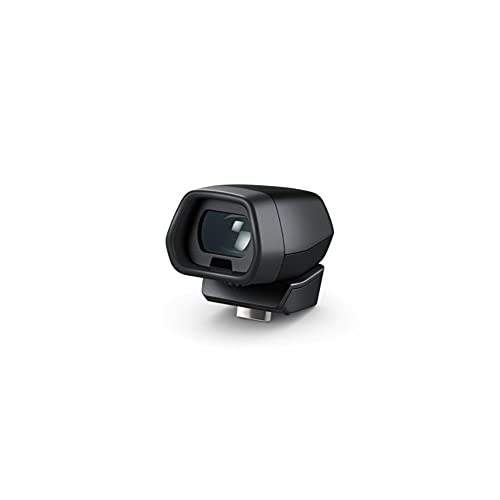
- Purpose-built for the Pocket Cinema Camera 6K Pro
- Proximity sensor and integrated status information
- -4 to +4 dioptre compensation
Best For: Pocket Cinema Camera 6K Pro owners
Best Feature-Rich HDMI EVF
Portkeys LEYE III 4K Electronic Viewfinder

- Adjustable +8D to -3D diopter range
- 1440x900 LCD with 8-bit color depth
- Waveform, peaking, false color, and 3D LUT tools
Best For: Rig-based monitoring with extensive on-set assists
Best Optical Framing Viewer
VD-11X Micro Director Viewfinder

- 11x magnification for detailed framing
- Multi-coated optical elements
- Supports multiple film and TV formats
Best For: Optical previsualization and director-style framing
Best Tilting EVF for SIGMA fp
Sigma EVF-11 Electronic Viewfinder

- Made for the SIGMA fp series
- 90-degree upward tilting mechanism
- Audio monitoring and portable SSD recording support
Best For: SIGMA fp series video shooters
Flexible Optical Director's Viewfinder
VD 11X Micro Director's HD Viewfinder

- 11x magnification with multi-coated optical glass
- Supports multiple cinema and TV aspect ratios
- Telescoping body with a 37mm filter thread
Best For: Directors and cinematographers planning shots across varied formats
LCD Sunlight Viewing Pick

- Fits most 3.0- and 3.2-inch 16:9 LCDs
- 3x focusable magnification
- Light-blocking eyecup supports either eye
Best For: Operators needing clearer outdoor views of a compatible LCD
Compact Format-Planning Option
Hilitand Director's HD Viewfinder

- 11x magnification with multi-coated optics
- Telescoping design for flexible use
- 37mm thread and standard aspect-ratio support
Best For: Filmmakers needing a lightweight optical framing aid
Daylight Detail Booster

- 3X optical-glass magnification
- Adjustable diopter and soft eye pad
- Fits compatible 3.0/3.2-inch screens
Best For: Daylight framing and detail checks
Focus Check Companion
Adjustable 3X Camera Viewfinder

- 3X enlargement for framing and focus
- Diopter adjustment supports clearer viewing
- Optical glass with comfortable eyepiece
Best For: Manual focus and outdoor LCD monitoring
Comfort-Focused Framing Aid

- 3X magnification for video detail checks
- Optical glass with adjustable diopter
- Soft rubber face contact for comfort
Best For: Comfortable video framing and macro observation
Best Integrated Upgrade – Blackmagic Pocket Cinema Camera Pro EVF
For filmmakers looking for camera viewfinders for cinema cameras, the Blackmagic Pocket Cinema Camera Pro EVF is a purpose-built electronic option for the Pocket Cinema Camera 6K Pro. It combines a proximity sensor, integrated status information, and adjustable diopter compensation for a more direct shooting experience.
Best For: Blackmagic Pocket Cinema Camera 6K Pro users who want a dedicated electronic viewfinder with built-in shooting information.
Pros:
- Designed specifically for the Blackmagic Pocket Cinema Camera 6K Pro.
- Includes a proximity sensor and integrated status information.
- Four-part glass diopter offers -4 to +4 dioptre compensation.
- Supports electronic viewing with a digital test chart.
Cons:
- Compatibility is limited to the specified Blackmagic camera.
- Not water resistant.
This is the most focused choice in the group for 6K Pro owners who prefer a matched accessory rather than a broadly compatible monitor or optical viewer.
Best Feature-Rich HDMI EVF – Portkeys LEYE III 4K Electronic Viewfinder
Portkeys LEYE III 4K HDMI Electronic Viewfinder 2.4 Inch LCD Monitor [Adjustable +8D~-3D]
Check Price On AmazonThe Portkeys LEYE III is a practical pick among camera viewfinders for cinema cameras when monitoring tools matter. Its LCD EVF offers adjustable diopter control, a 2.9-inch 1440×900 display, and a wide set of exposure, focus, framing, and color-assistance features.
Best For: Shooters who want an HDMI electronic viewfinder with waveform, peaking, false color, LUT, and other on-set monitoring tools.
Pros:
- Adjustable +8D to -3D diopter accommodates different eyesight needs.
- 2.9-inch LCD provides 1440×900 effective resolution and 8-bit color depth.
- Includes 3D LUT, waveform, histogram, peaking, false color, zebra, and audio meters.
- Metal rear cover and round sponge eye mask support durable, comfortable viewing.
Cons:
- Uses a Canon E6 battery, which must be available for operation.
- Its 13.1-ounce weight and 6.3 x 4.5 x 4-inch dimensions may add bulk to a rig.
Choose the LEYE III if you want an EVF that does more than display the image, especially when exposure and focus aids are central to your workflow.
Best Optical Framing Viewer – VD-11X Micro Director Viewfinder
The VD-11X takes a different approach from electronic camera viewfinders for cinema cameras: it is an optical director’s viewfinder designed for framing rather than electronic image monitoring. Its 11x magnification, telescopic design, and multi-coated optical elements support detailed viewing across multiple film and television formats.
Best For: Directors and cinematographers who need a compact optical framing tool for multiple camera and film formats.
Pros:
- 11x magnification helps with precise scene and framing evaluation.
- Multi-coated optical elements are intended to provide clear viewing.
- Compatible with formats including 35mm, S16, anamorphic, and several TV camera formats.
- 37mm filter thread supports compatibility with a wide-angle converter.
Cons:
- It is an optical viewfinder, not an electronic camera-feed monitor.
- Requires compatibility with the listed formats or a 37mm filter thread.
- Not water resistant.
This is a specialized choice for previsualization and framing. It suits users who value format versatility and optical magnification over live electronic monitoring features.
Best Tilting EVF for SIGMA fp – Sigma EVF-11 Electronic Viewfinder
The Sigma EVF-11 is a camera-specific electronic viewfinder for the SIGMA fp series. For filmmakers comparing camera viewfinders for cinema cameras, its large viewing design, 90-degree upward tilt, and audio-monitoring support make it a straightforward option for adapting the camera to different shooting positions.
Best For: SIGMA fp series users who want a dedicated EVF with a tilting mechanism and audio monitoring during video capture.
Pros:
- Designed for compatibility with the SIGMA fp series.
- Large viewfinder emphasizes clarity and viewing comfort.
- Tilts upward by 90 degrees for flexible positioning.
- Supports audio monitoring and external recording to a portable SSD.
Cons:
- Compatibility is limited to SIGMA fp series cameras.
- Does not list the broader monitoring tools provided by the Portkeys model.
The EVF-11 is a sensible matched accessory for fp-series owners who need a comfortable viewing angle and video-oriented connectivity rather than a universal EVF.
Flexible Optical Director's Viewfinder – VD 11X Micro Director's HD Viewfinder
For filmmakers comparing camera viewfinders for cinema cameras, the VD 11X is a compact optical option built around 11x magnification, multi-coated glass, and support for multiple film and television formats. Its telescoping body, aspect-ratio support, and 37mm filter thread make it useful for planning shots and checking composition without relying solely on the camera display.
Best For: Directors and cinematographers who want an optical scene viewer with broad aspect-ratio and format compatibility.
Pros:
- 11x magnification with multi-coated optical elements for a detailed view.
- Supports common aspect ratios from 4:3 and 16:9 through anamorphic formats.
- Telescopic design and 37mm filter thread add flexibility for different setups.
- Helps block ambient light while composing and checking focus.
Cons:
- It is an optical scene viewer rather than an electronic monitor or camera-mounted LCD loupe.
- Compatibility is described by supported camera and film formats, so users should verify their setup.
- It is not water resistant.
The VD 11X stands out when format versatility and high magnification matter more than an integrated electronic display. Its adjustable design and 37mm thread broaden its usefulness for production planning.
LCD Sunlight Viewing Pick – Kamerar CVF-2 LCD Viewfinder
The Kamerar CVF-2 is a practical choice among camera viewfinders for cinema cameras when you compose on a 3.0- or 3.2-inch LCD. Its 3x focusable magnification and light-blocking design make the camera screen easier to inspect in bright conditions, while the adjustable mounting bands keep installation simple.
Best For: Camera operators who use a compatible 16:9 LCD and need clearer outdoor viewing with magnification.
Pros:
- Compatible with most 3.0-inch and 3.2-inch 16:9 LCD screens.
- Provides 3x magnification with a focusable, edge-to-edge view.
- Blocks excess light for improved contrast in bright sunlight.
- Eyecup works with either eye and can accommodate eyeglasses.
Cons:
- It is intended for 16:9 LCD screens in the stated size range.
- Mounting uses adjustable rubber bands, which may not suit every camera configuration.
- It depends on the camera’s LCD rather than providing an independent display.
The CVF-2 is a focused LCD loupe solution for crews who need a stable, magnified view in bright environments. Confirm your screen size and aspect ratio before choosing it.
Compact Format-Planning Option – Hilitand Director's HD Viewfinder
The Hilitand VD11X is a compact optical choice for shoppers seeking camera viewfinders for cinema cameras and film-format planning. It combines 11x magnification with multi-coated optics, a telescoping design, and support for standard film and TV aspect ratios, including 16:9.
Best For: Filmmakers who want a lightweight optical director’s viewfinder for checking framing across common production formats.
Pros:
- 11x magnification and multi-coated optical elements support detailed viewing.
- Telescoping construction allows adjustment for different uses.
- Aspect-ratio lock ring helps with standard film and TV framing.
- 37mm filter thread can accept a compatible wide-angle converter.
Cons:
- It is an optical viewfinder and does not provide an electronic camera feed.
- The supplied notes do not specify water resistance or additional mounting hardware.
- Users should confirm that their intended format matches the listed compatibility.
With its compact size and cinema-oriented format support, the Hilitand is suited to previsualizing compositions and checking framing. Its main appeal is straightforward optical magnification rather than monitoring features.
Daylight Detail Booster – 3X LCD Viewfinder Magnifier
For filmmakers comparing camera viewfinders for cinema cameras, this 3X LCD magnifier is a practical option for compatible 3.0- and 3.2-inch screens. Its optical glass, adjustable diopter, and sunshade-style design are intended to make daylight framing and detail checking easier.
Best For: Outdoor shooting, macro observation, and users who want a larger view from a compatible DSLR or mirrorless LCD.
Pros:
- 3X magnification provides an enlarged view for checking framing and focus.
- Optical glass is designed to preserve the original image without obvious deformation.
- Adjustable diopter and soft rubber eye contact improve viewing comfort.
- Includes 1/4-inch and 3/8-inch screw-hole options for mounting flexibility.
Cons:
- Compatibility is focused on 3.0- and 3.2-inch LCD screens.
- Its 12.6-ounce weight may add noticeable bulk to a compact setup.
This model makes the most sense when daylight visibility and enlarged LCD inspection matter more than keeping a rig minimal. Confirm your screen size and mounting arrangement before buying.
Focus Check Companion – Adjustable 3X Camera Viewfinder
Among camera viewfinders for cinema cameras, this adjustable 3X model is aimed at shooters who need a clearer, enlarged look at a compatible LCD while recording or composing. The diopter adjustment and optical-glass viewing path are useful for checking focus and fine details outdoors.
Best For: Manual focusing, outdoor composition, and users who benefit from diopter adjustment, including glasses wearers and seniors.
Pros:
- 3X magnification enlarges the view on 3.0- and 3.2-inch screens.
- Adjustable diopter helps fine-tune visual clarity.
- Optical glass is designed to show natural image details without obvious distortion.
- Soft rubber eyepiece helps with comfort and stray-light reduction.
Cons:
- Designed for a limited range of 3.0- and 3.2-inch camera screens.
- At 13.5 ounces, it may not suit lightweight rigs.
This is a sensible choice when focus confidence and viewing comfort are priorities. Its main limitation is the need to verify both screen size and the available 1/4-inch mounting connection.
Comfort-Focused Framing Aid – LIZEALUCKY 3X LCD Viewfinder
For shoppers evaluating camera viewfinders for cinema cameras, the LIZEALUCKY 3X LCD viewfinder offers an enlarged, daylight-oriented view for compatible 3.0- and 3.2-inch displays. It combines optical glass, diopter adjustment, and a soft rubber contact point for video observation and focusing.
Best For: Video shooters, macro observation, and users who want more comfortable viewing while checking details on a compatible LCD.
Pros:
- 3X magnification provides a clearer enlarged view during shooting.
- Optical glass is designed to preserve the original image without incomplete framing.
- Adjustable diopter supports closer observation and user-specific viewing needs.
- Soft rubber padding improves comfort against the face.
Cons:
- Compatibility is limited to 3.0- and 3.2-inch LCD screens according to the supplied notes.
- The product details do not specify included mounting hardware or weight.
This viewfinder is best suited to users who value comfortable, enlarged LCD viewing during video work. Check your camera’s screen dimensions and mounting requirements before committing.
How We Picked These Camera Viewfinders for Cinema Cameras
We focused on the features that matter most on set: compatibility, viewing method, magnification, diopter adjustment, display resolution, mounting flexibility, and outdoor usability. The selection includes dedicated EVFs for specific camera systems, HDMI electronic viewfinders, optical director’s finders, and LCD loupe-style accessories. Because these products serve different purposes, the best choice depends on whether you need a live electronic image, a field-of-view reference, or a clearer view of your existing camera screen.
We also considered practical factors such as power requirements, filter-thread compatibility, construction materials, portability, and whether the design is better suited to handheld, tripod, studio, or location work.
Quick Comparison
| Type | Best For | What to Check |
|---|---|---|
| Dedicated electronic EVF | Integrated cinema-camera operation | Camera compatibility, connector, power, mounting |
| HDMI electronic viewfinder | External monitoring and flexible rigs | HDMI format support, latency, battery life |
| Optical director’s finder | Shot planning and lens-angle reference | Magnification, focal-length markings, diopter |
| LCD magnifier | Sunlight control and sharper camera-screen viewing | Screen size, mounting method, eye relief |
Key Buying Factors for Camera Viewfinders for Cinema Cameras
Compatibility and Connections
Start with the camera model and available outputs. A dedicated EVF may offer the cleanest integration but can work only with a particular camera or accessory port. HDMI models are more flexible, yet you should confirm resolution, frame-rate support, cable clearance, and power requirements before buying.
Electronic Versus Optical Viewing
Electronic viewfinders display the camera’s actual feed and may support exposure tools, overlays, focus aids, and color monitoring. Optical director’s finders do not show the recorded image, but they are useful for visualizing coverage, comparing focal lengths, and planning shots without powering the camera. LCD magnifiers enlarge and shade the camera’s existing screen rather than creating a separate video feed.
Magnification, Diopter, and Comfort
Higher magnification can improve detail but may reduce the visible area or make eye positioning more critical. Adjustable diopter control is valuable for operators who wear glasses or need a precise focus adjustment. For long shooting days, also consider eyecup comfort, eye relief, weight, and whether the viewfinder can be positioned naturally on a shoulder or tripod rig.
Rigging and Outdoor Use
Check mounting points, thread sizes, articulation, and the path of HDMI or power cables. A sunshade or enclosed loupe is particularly useful in bright locations. Metal construction can improve durability, while a lighter plastic design may be preferable for handheld work.
Who Should Buy Which Camera Viewfinders for Cinema Cameras?
Choose a dedicated electronic EVF if you use a compatible cinema camera and want a professional, integrated operating experience. An HDMI EVF is the better fit for a modular rig that may change cameras or requires an external monitor feed. Pick an optical director’s finder when your priority is shot planning, lens selection, and quick field-of-view checks rather than live exposure or focus information.
An LCD magnifier is usually the most economical solution for DSLR-style screens and smaller cinema-camera displays. It is a practical upgrade for daylight shooting, handheld composition, and operators who want more stable eye-level framing without adding a full electronic monitor. Before ordering, verify the screen dimensions, mounting system, camera clearance, and whether the product’s magnification and diopter range suit your eyesight and shooting position.